
Anthropic CEO's Leaked Internal Memo: 'Dictator-Style Praise' and 'Safety Theater' Aimed at OpenAI
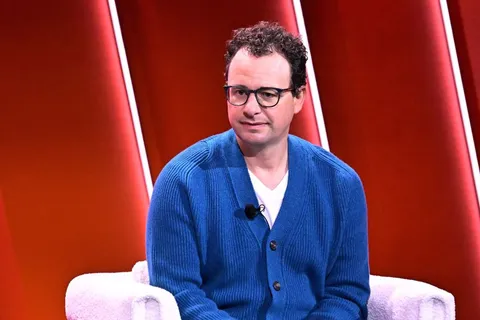
A 1,600-word internal memo from Anthropic CEO Dario Amodei to employees has leaked. The memo labels OpenAI's Pentagon contract pursuit as 'dictator-style praise,' its safety commitments as 'safety theater,' and certain claims as 'straight up lies,' reigniting the AI industry's safety debate.
A 1,600-word internal memo from Anthropic CEO Dario Amodei to employees has been leaked. In the memo, Amodei characterized OpenAI's pursuit of Pentagon contracts as 'dictator-style praise,' its safety commitments as 'safety theater,' and certain public claims as 'straight up lies.' It marks the moment tensions between the AI industry's two giants erupted into public view.
1. The Memo's Core: Three Criticisms Aimed at OpenAI

Amodei's memo laid out his criticism of OpenAI along three axes.
First, 'dictator-style praise.' Amodei argued that OpenAI has been showering the Trump administration with excessive flattery to secure Pentagon contracts. He deemed this manner of tech companies currying favor with political power to be unhealthy.
Second, 'safety theater.' The criticism is that OpenAI publicly emphasizes AI safety while consistently rolling back its actual safety standards. Amodei likened this to a theatrical performance — projecting the appearance of safety without any real substance.
Third, 'straight up lies.' Amodei directly accused certain OpenAI public statements of being factually wrong. For a CEO to level this kind of criticism at a competitor is extraordinarily rare.
2. Political Donations and AI Regulation: Silicon Valley's New Game
The memo reportedly also addressed the issue of AI companies' political donations. Major AI companies including OpenAI are becoming increasingly entangled in Washington politics, and Amodei expressed concern that this is distorting the AI regulation debate.
Amodei emphasized that Anthropic has consistently maintained its support for AI safety regulation. OpenAI, by contrast, initially championed regulation but has gradually shifted toward deregulation as commercialization ramped up — a widely held view across the industry.
This goes beyond simple corporate rivalry, raising a fundamental question: who gets to shape the regulatory framework for the entire AI industry, and in which direction?
3. Context of the Leak: An Extension of the Pentagon Conflict

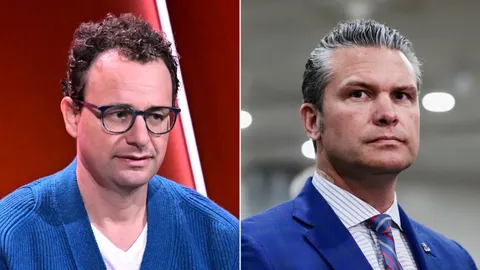
The memo leak comes at a time of escalating tensions between Anthropic and the U.S. Department of Defense. Since Defense Secretary Hegseth summoned Amodei to the Pentagon in February and demanded unrestricted military use of AI models, Anthropic has maintained its position of upholding its own red lines on military AI use.
In this context, OpenAI's aggressive expansion of Pentagon cooperation poses a dual threat to Amodei. Not only is a competitor monopolizing government contracts, but Anthropic's safety-first stance risks becoming a competitive disadvantage in the market.
4. Industry Reactions: Public Criticism Is a Double-Edged Sword
Industry reactions since the leak have been divided. The AI safety camp has rallied behind Amodei for directly calling out the industry's hypocrisy. His criticism carries weight given that numerous AI researchers and safety experts have long pointed to the gap between OpenAI's safety promises and its actual behavior.
But critical perspectives exist as well. Some argue that a rival CEO leveling this kind of attack in an internal memo is itself unprofessional. Questions have also been raised about the circumstances of the 'leak' — the possibility of an intentional release cannot be ruled out.
OpenAI has reportedly not yet issued an official response.
5. The Heart of the 'Safety Theater' Debate

The term 'safety theater' that Amodei employed was borrowed from the critique of post-9/11 airport security procedures — implying measures that offer the illusion of safety with minimal actual security benefit.
Applying this label to OpenAI is a significant provocation. OpenAI operates safety teams, conducts red-team testing, and publishes model cards. But Amodei's argument is that all these processes amount to image management rather than genuine safety assurance.
There is some basis for his critique. Over the past year, OpenAI has experienced a major exodus of safety-related personnel. Key safety researchers including Ilya Sutskever and Jan Leike have departed, and internal reports indicated reduced computing resource allocation for the safety team. Amodei's criticism is not entirely without foundation.
Conclusion: The Fault Lines the Leaked Memo Exposed
Dario Amodei's leaked internal memo has laid bare deep fault lines within the AI industry. Prioritize safety, or conform to market and government demands? This fundamental conflict extends beyond the competition between Anthropic and OpenAI — it defines the trajectory of the entire AI industry.
The memo's sharp language — 'dictator-style praise,' 'safety theater,' 'straight up lies' — despite its provocative tone, confronts questions the industry has long avoided. Are AI companies' safety promises substantive, or merely marketing? The answer will ultimately be delivered by consumers, regulators, and the market.
- TechCrunch - Anthropic CEO's leaked memo slams OpenAI's Pentagon deal
- Sherwood News - Dario Amodei internal memo criticizes OpenAI military contracts
- Axios - Anthropic CEO rips OpenAI in internal memo
- Fortune - Leaked Anthropic memo reveals CEO's sharp criticism of OpenAI
- CNN - Anthropic CEO Amodei leaked memo on OpenAI and Pentagon