
Claude Cowork Lands on Windows: AI Desktop Agents Target 70% of the Market

Anthropic's AI agent Claude Cowork has landed on Windows, targeting 70% of the global desktop market. Non-developers can now automate file management and document creation, while Microsoft paradoxically adopts its competitor internally.
AI agents have finally landed on the mainstream desktop. On February 10, 2026, Anthropic officially released the Windows version of its AI desktop agent Claude Cowork. Just one month after launching exclusively on macOS on January 12, Cowork has expanded to Windows — which accounts for roughly 70% of the world's desktop computers.
Cowork extends the agentic capabilities of Claude Code, a developer-only coding agent, to non-developers. Anyone who has never written a line of code can now delegate multi-step tasks like file organization, document creation, and spreadsheet analysis to AI. Intriguingly, Microsoft has been internally adopting tools from its direct competitor Anthropic, illustrating just how complex the competitive landscape of the AI era has become.
What Is Claude Cowork?

In one phrase, Claude Cowork is 'Claude Code without the code.' It can read, edit, and create files in user-designated folders. It converts receipt photos into expense reports, compiles scattered notes into drafts, and auto-organizes download folders. Unlike traditional chatbots, once given a task, it independently plans and executes multiple steps autonomously.
Anthropic describes Cowork as 'less like a back-and-forth and more like leaving messages for a coworker.' It's not a conversational chatbot but an agent that handles tasks on its own. It can also connect to external services through MCP (Model Context Protocol) connectors and extend its capabilities with Skills and plugins for document and presentation creation.
Windows Launch Timeline and Pricing
Cowork's rollout was phased. It began as a macOS research preview on January 12, available first to Max subscribers ($100/month). On January 16, it expanded to Pro subscribers ($17-20/month), and on January 23, Team and Enterprise plans were included. On February 10, the Windows version launched with what Anthropic calls 'full feature parity' with macOS.
Cowork is currently available on all paid plans: Pro ($17-20/month), Max 5x ($100/month), Max 20x ($200/month), and Team Premium ($100-125/month per seat). Free users cannot access it. The Windows version introduces global and folder-specific instructions, allowing users to set preferred tone, format, and role context that applies across every session.
Claude Code vs Cowork: Same Tech, Different Markets
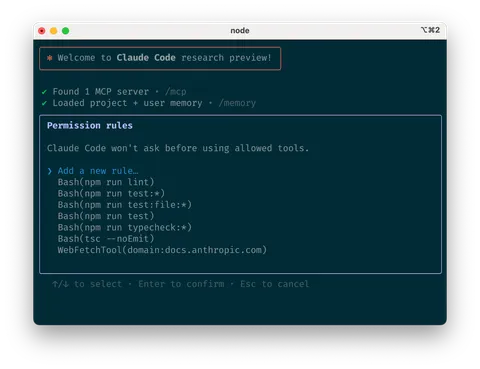
Claude Code and Claude Cowork are built on the same Anthropic technology but target completely different markets. Claude Code is a terminal-based CLI coding agent for developers, specialized in code writing, debugging, and system architecture design. It holds a dominant position in the global coding agent market.
Cowork, on the other hand, is a GUI-based desktop agent for non-developers. It uses natural language instead of code and specializes in office tasks like file management and document creation. Remarkably, Cowork was built using Claude Code itself in just a week and a half, as revealed by Boris Cherny, Anthropic's head of Claude Code — demonstrating AI agents' self-replicating productivity potential.
Microsoft's Paradoxical Strategy: Adopting a Competitor Internally

Cowork's arrival on Windows further complicates the relationship between Microsoft and Anthropic. Microsoft has invested $13 billion in OpenAI as a partner while simultaneously spending approximately $500 million annually on Anthropic. Even more striking, Microsoft is encouraging thousands of internal employees to use Claude Code.
According to The Verge, Microsoft's CoreAI team has been testing Claude Code, and the Business and Industry Copilot teams have approved it across all code and repositories. Microsoft software engineers are now expected to use both Claude Code and GitHub Copilot and provide comparative feedback. In essence, they're being asked to use both their own product and a competitor's simultaneously.
$285 Billion SaaS Market Cap Evaporated — Windows Expansion Amplifies the Impact
The SaaS industry panicked following Anthropic's wave of AI agent product announcements, including Cowork. Bloomberg reported that the software stock crash triggered by Cowork, legal AI tools, and other Anthropic agent releases evaporated $285 billion in market capitalization. Companies whose products overlap with AI agent capabilities — project management tools, writing assistants, data analysis platforms, and workflow automation software — took direct hits.
With Windows support now added, the scope of the threat has expanded dramatically. Windows accounts for 70% of global desktops, and its share in enterprise environments is overwhelming. While macOS is strong in creative and developer markets, Windows is the backbone of traditional enterprise sectors including finance, legal, administration, and manufacturing. Cowork's Windows launch signals a full-scale entry into the enterprise customer market.
AI Agent Security and Limitations

Powerful capabilities come with risks. Anthropic emphasizes that Cowork can only see folders users explicitly grant access to. It uses a virtual machine (VM) internally for enhanced security. Boris Cherny explained to Wired that 'if you don't give it access to a folder, Claude literally cannot see that folder.'
However, the risk of prompt injection attacks remains. Malicious instructions hidden in documents or websites can manipulate AI agents. The Windows version adds additional safety constraints by restricting file access to the user's personal folder. Some developers expressed frustration, but as one Reddit user noted: 'Seeing how many people nuked themselves with Claude Code, it's much safer to limit people.' Cowork remains in research preview.
AI Agents on the Desktop Are Reshaping the Office
Claude Cowork's Windows launch is not just a platform expansion. It marks a turning point where AI agents move beyond developer terminals onto the desktops of ordinary office workers. The possibility that a single AI agent could replace the file management, task automation, and information organization tools the software industry spent decades building is becoming reality.
Microsoft internally adopting a competitor and investors fleeing SaaS companies show how seriously the market is taking this shift. What's certain is that the gap between those who learn to work with AI and those who don't is widening rapidly. The future Cowork envisions is one where AI becomes your coworker.

- VentureBeat - Anthropic's Claude Cowork finally lands on Windows — and it wants to automate your workday
- Anthropic (Claude Blog) - Introducing Cowork: Claude Code for the rest of your work
- The Verge - Microsoft is encouraging thousands of employees to adopt Claude Code
- Bloomberg - 'Get Me Out': Traders Dump Software Stocks as AI Fears Erupt
- Reuters - US software stocks slump as AI disruption fears take over