
The AI Paradigm Shift: The AI Bubble Didn't Burst — It Became Reality

The center of the AI discourse has shifted from 'bubble or not' to 'real industry shock.' Big Tech's $700 billion in planned investment, 55,000 AI-attributed layoffs, and the DeepSeek disruption. The bubble narrative is fading, and the age of adaptation has begun.
In February 2026, the landscape of AI discourse has changed. Just a year ago, warnings that 'the AI bubble is about to burst' poured out every week. Voices predicting a repeat of the dot-com collapse dominated Wall Street and Silicon Valley. But now, the bubble narrative is quietly exiting the stage. What has taken its place is a far more concrete and uncomfortable question: what real impact is AI having on industry and employment? Yahoo Finance has coined this moment 'The Great AI Scare of 2026.'
Why the AI Bubble Narrative Lost Steam: This Isn't the Dot-Com Era
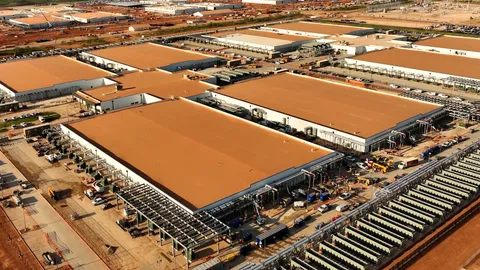
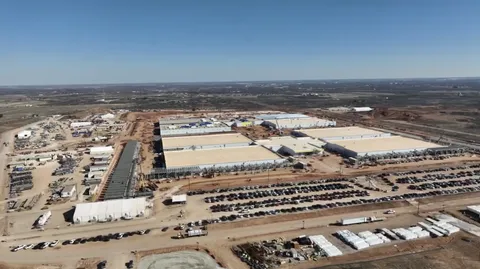
The most direct reason the bubble narrative has weakened is the numbers. Dot-com era companies inflated stock prices on hype alone, with no revenue to show. In contrast, AI companies in 2026 are posting real revenue. OpenAI has surpassed $20 billion in annual recurring revenue (ARR), and Anthropic has exceeded $9 billion. The Big Four tech companies (Microsoft, Google, Amazon, Meta) plan to invest roughly $700 billion in AI infrastructure in 2026. These figures represent execution, not expectations.
Janus Henderson published an analysis identifying 'eight reasons AI is different from the dot-com era.' The core argument is profitability. AI companies have already built multi-layered revenue structures through subscription models, enterprise contracts, and API pricing. Forbes was even more blunt. In an article titled 'The Non-Existent AI Bubble,' it argued that classifying current AI investment as a bubble is an error based on superficial similarities to the dot-com era.
Stanford University's Human-Centered AI Institute (HAI) used a notable phrase in its 2025 AI Index Report: 'The era of AI evangelism is transitioning into the era of AI assessment.' There is no longer a need to convince anyone that AI will change the world. The question now is how AI is actually changing it, and how fast.
The AI Layoff Wave: Industry Shock Confirmed by the Numbers
What has filled the space left by the retreating bubble narrative is employment shock. In 2025 alone, the number of layoffs explicitly citing AI as a reason reached 55,000 — a 12-fold increase compared to two years prior. In January 2026, U.S. corporate layoffs hit 108,435, the highest January figure since 2009. CBS News reported this as 'a new form of restructuring driven by AI.'
Individual cases are even more striking. Amazon cut 16,000 positions, and Pinterest reduced its workforce by 15%. Education technology company Chegg laid off 45% of its employees, stating that AI had replaced its core business model. HP announced cuts of 4,000 to 6,000 workers. Notably, CEOs have started explicitly saying 'we are reducing headcount because of AI.' This contrasts sharply with the past, when such moves were hidden behind euphemisms like 'efficiency optimization' or 'strategic realignment.'
The AI Washing Controversy: What's the Real Reason Behind the Layoffs?
But not all 'AI layoffs' are actually caused by AI. OpenAI CEO Sam Altman himself acknowledged this problem. In an interview with Fortune, he pointed out that 'some companies are blaming layoffs on AI when AI has nothing to do with it.' This is so-called AI washing. By rebranding restructuring caused by poor performance or strategic failures as an 'AI transition,' companies can simultaneously project an image of innovation to investors and a narrative of inevitability to displaced employees.
The problem is that the boundary between actual AI displacement and AI washing is blurry. Cases like Chegg, where ChatGPT directly replaced a core service, are clear. But in large-scale corporate layoffs, precisely isolating how much AI was the direct cause is difficult. According to analysis by Revelio Labs, AI's actual impact is more visible in 'reduced new hiring' than in 'mass layoffs.' Declining job postings don't make headlines, but for job seekers, they are just as devastating as layoffs.
The DeepSeek Shock: Cracks in the Massive Investment Narrative

DeepSeek, which emerged in late 2025, shook yet another assumption of the AI industry. This Chinese AI startup developed frontier-level models at a fraction of the cost of Big Tech incumbents. The implicit consensus that 'cutting-edge AI development requires billions in investment' had cracked.
The market response was immediate. The Nasdaq plunged, with roughly $1 trillion in market capitalization evaporating. Shares of AI infrastructure companies, including Nvidia, fell sharply. But the DeepSeek shock carried a paradoxical message as well: 'Efficient AI development is possible.' If competitive AI can be built without astronomical-scale data centers and GPU clusters, it also means AI technology is becoming more accessible. To bubble believers, DeepSeek was 'evidence of overinvestment.' From another perspective, it was 'a possibility for AI democratization.'
Expert and Institutional Outlook: The Shock Is Just Beginning
Global institutions are unanimous in one direction: the shock is real and will accelerate. Goldman Sachs analyzed that if AI adoption accelerates, U.S. unemployment could rise by 0.3 percentage points, with 7% of workers fully losing their jobs within a decade. In absolute terms, this translates to millions.
The IMF, in its January World Economic Outlook update, classified the AI investment boom as a growth engine offsetting trade headwinds. From a macroeconomic perspective, AI is seen as an engine, not a risk. The World Economic Forum's Future of Jobs Report provided more specific figures: 92 million jobs will be displaced by AI by 2030, but 170 million new jobs will be created simultaneously, yielding a net increase of 78 million.
Stanford professor Erik Brynjolfsson summarized the current moment: 'The question has shifted from "does AI matter?" to "how fast is it changing things, and who is being left behind?"' It is no longer a stage for debating AI's impact itself, but for discussing the speed and distribution of that impact. For the WEF's net-positive projection to materialize, massive reskilling and industrial transition must accompany it — and in most countries, that preparation is not yet sufficient.
AI Became Reality, Now Comes the Hard Part
The AI bubble didn't burst. Instead, it became reality. The predictions of those waiting for a dot-com-style collapse missed the mark, and AI companies have proven their value with real revenue and real customers. But that 'reality' is not good news for everyone. 55,000 AI-attributed layoffs, over 100,000 monthly job cuts, CEOs explicitly citing AI. These numbers show that AI has become a technology that affects real people's livelihoods, not just a vision on a slide deck.
The key question is no longer 'will the AI bubble burst?' It is 'how do we adapt to this transition?' The 170 million new jobs projected by the WEF will not materialize automatically. Reskilling, industrial restructuring, and redesigning social safety nets must accompany them. The retreat of the bubble narrative is not the end of a crisis — it marks the beginning of harder, more concrete challenges ahead.

- Forbes - The Non-Existent AI Bubble
- Stanford HAI - AI Index Report 2025
- Goldman Sachs - AI and the Future of Work
- IMF - World Economic Outlook Update January 2026
- World Economic Forum - Future of Jobs Report 2025
- CBS News - Companies using AI to justify mass layoffs
- Fortune - Sam Altman says some companies use AI as excuse for layoffs
- New York Times - The Great AI Scare of 2026