
Seedance 2.0 Copyright Firestorm: ByteDance Delays Global Launch Indefinitely
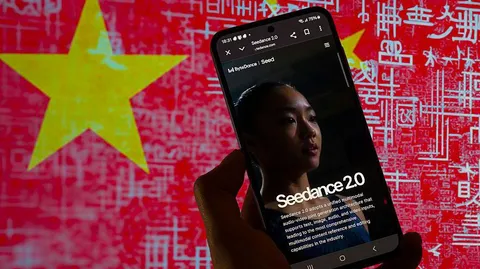
ByteDance delays Seedance 2.0 global launch after Disney, MPA, and Hollywood push back on AI-generated videos infringing copyrighted IP.
In February 2026, AI video generation technology collided head-on with Hollywood. ByteDance's AI video generation model Seedance 2.0 triggered a massive copyright infringement crisis immediately after launch, leading to an unprecedented indefinite delay of its global API release.
AI-generated videos flooded the internet: Spider-Man dancing, Darth Vader cooking, and the doll from Squid Game singing. Disney called it 'virtual robbery,' and the Motion Picture Association (MPA) declared that 'infringement is a feature, not a bug.' The copyright implications of AI-generated content exploded from theory into reality.
Seedance 2.0: AI That Creates Cinema-Quality Video in 15 Seconds
Seedance 2.0 is an AI video generation model developed by ByteDance, the parent company of TikTok. Given text or image input, it automatically generates cinema-quality video up to 15 seconds long, complete with sound effects and dialogue — producing results on an entirely different level from existing AI video tools.
It was first released in China on February 12, 2026, through the Jimeng app, with a global API launch scheduled for February 24. The industry began calling Seedance 2.0 a 'second DeepSeek shock,' reassessing Chinese AI capabilities. Small production companies welcomed the tool, noting that science fiction and action videos could now be produced on budgets as low as $140,000.
But this excitement crashed into the wall of copyright infringement within just two days of launch.
Copyright Infringement Explosion: Hollywood's Nightmare

As soon as Seedance 2.0 launched in China, copyright-infringing videos spread explosively. Users generated videos featuring famous Hollywood characters with just a few lines of prompting. Videos appeared featuring Disney characters like Spider-Man, Grogu (Baby Yoda), and Darth Vader, along with Deadpool dancing.
The damage extended far beyond Disney. IP from major studios was comprehensively targeted — Netflix's Stranger Things and Squid Game, Warner Bros.' Batman and Superman, and more. Even more alarming were deepfake videos using real actors' and celebrities' faces without authorization. While copyright concerns around AI video tools had remained a theoretical debate, Seedance 2.0 turned them into reality at an overwhelming scale.
Deadpool screenwriter Rhett Reese looked at the situation and lamented: 'I think we're done.' Shock rippled through the entire creator community.
Hollywood Strikes Back: From Disney to the MPA

Hollywood's response was immediate and comprehensive. Disney moved first. On February 13, the day after launch, Disney sent a cease-and-desist letter to ByteDance, characterizing Seedance 2.0 as 'virtual robbery of Disney IP.'
The Motion Picture Association (MPA) joined immediately. In its first letter, the MPA demanded an 'immediate halt to infringement,' followed by an even stronger second letter on February 20. In this letter, the MPA used the phrase 'Infringement is a feature, not a bug' — arguing that since Seedance 2.0's training data itself consists of copyrighted works, infringement is an inherent systemic flaw.
Paramount, Sony, Universal, and other major studios pushed back in succession, and actors' union SAG-AFTRA issued a statement joining the offensive. Warner Bros. also signaled legal action to protect its IP. It was an unprecedented scene: all of Hollywood speaking with one voice against AI video generation technology.
Japan Launches Investigation: Protecting Animation IP
The backlash was not limited to Hollywood. The Japanese government launched an official investigation into potential copyright violations by Seedance 2.0. As home to the world's largest animation industry, Japan reacted sensitively to AI tools mass-producing content mimicking Japanese animation styles.
This signaled that the copyright dispute was expanding beyond English-language entertainment to the entire global content industry.
ByteDance's Response: Enhanced Safeguards and Delayed Launch

Facing mounting backlash, ByteDance took action. On February 16, it issued an official statement pledging to 'respect intellectual property rights and strengthen safeguards.' Specifically, it temporarily disabled the ability to generate real people's faces and voices.
But the most decisive measure was the indefinite postponement of the global API launch. Originally scheduled for February 24, the global launch was officially confirmed delayed as of February 21, with no new timeline provided.
Critics, however, point out that ByteDance's response is insufficient. It only blocked deepfakes of real people, without offering a fundamental solution for character IP infringement. As the MPA emphasized, if the training data itself contains copyrighted works, blocking specific prompts alone will not solve the problem.
AI Video Generation and Copyright: An Industry-Wide Challenge
The Seedance 2.0 crisis is not ByteDance's problem alone. OpenAI's Sora, Google's Veo, Runway, and every other AI video generation tool carry the same copyright risks. Seedance 2.0 became the first large-scale case because the technology's quality and accessibility had crossed a critical threshold.
This crisis stands in stark contrast to the reported $1 billion licensing deal between Disney and OpenAI. The content industry is not rejecting AI itself, but forcing AI to operate within the existing IP framework. With landmark cases like The New York Times vs. OpenAI still pending, the Seedance 2.0 crisis will add powerful fuel to these legal battles.
Can the Law Keep Up with the Speed of Technology?
The essential truth revealed by the Seedance 2.0 crisis is clear: the pace of AI technology has completely outstripped the copyright legal framework's ability to respond. The transition from an era where producing a 15-second video cost hundreds of thousands of dollars to one where a single prompt suffices renders all existing rules obsolete.
ByteDance's global launch delay is merely a stopgap measure, not a fundamental solution. AI video generation technology will continue to advance, and the scale and sophistication of copyright infringement will grow alongside it. Ultimately, what the industry must find is not a way to block the technology, but a new framework that protects creators' rights while embracing innovation.
Seedance 2.0 has proven to the world just how urgently that framework is needed.
- BBC - What is Seedance - ByteDance's AI video tool
- TechCrunch - Hollywood isn't happy about the new Seedance 2.0 video generator
- Axios - Disney sends cease-and-desist to ByteDance over Seedance
- Variety - MPA Pushes ByteDance to Shut Down Seedance Copyright Violations
- Hollywood Reporter - MPA Sends Cease-and-Desist to ByteDance Over Seedance 2.0
- CNBC - ByteDance adds safeguards to Seedance after copyright backlash