Are Chinese Video Models Now the Best? Kling 3.0 and Seedance 2.0 Launch Together
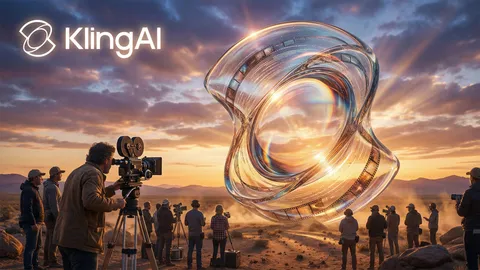
Type a few lines, get a 4K video? China dropped two AI video models in two days. Kuaishou's Kling 3.0 and ByteDance's Seedance 2.0 are already doing things OpenAI's Sora 2 and Google's Veo 3.1 can't, and the AI video market could be in for a shakeup.
Write a few lines of text, get a 4K video. Just a year ago, that sounded like science fiction. But in the first week of February 2026, two Chinese companies made it real with new AI video generation models. On February 5, Kuaishou (TikTok's rival) dropped Kling 3.0. Two days later on February 7, ByteDance (TikTok's parent) followed with Seedance 2.0.
OpenAI's Sora 2 and Google's Veo 3.1 have been the frontrunners in AI video generation. Now, two Chinese challengers showed up in the same week, and China's aggressive push has reached the video space.
Kling 3.0: True 4K, and Already Making Money
The biggest deal about Kling 3.0 is 'real 4K.' Most AI video tools generate at lower resolutions and then stretch the image to 4K (upscaling). Kling 3.0 renders in 4K from the start. The difference in detail is noticeable, and it can produce clips up to 15 seconds long.
It also auto-generates voice in five languages, including Korean. But the really fun part is 'multi-shot storyboarding.' Write one prompt, and the AI automatically splits it into multiple scenes and shots, like a director planning a storyboard. There's even a feature that extracts a character's face and voice from a short clip and reuses them across different scenes.
What sets Kling apart isn't just the tech, though. It's already making serious money. The platform has 60 million users, 12 million monthly active users, and pulls in $240 million a year in revenue. Over 30,000 businesses are paying customers. AI video review site Curious Refuge gave it an 8.1 out of 10, calling it 'the new king of AI video generators.'
Seedance 2.0: Feed It Photos, Video, Music, and Text All at Once
Two days later, TikTok's parent company ByteDance unveiled Seedance 2.0. The official launch is set for February 24, but demo videos leaked early and got everyone talking.
What makes Seedance 2.0 special is how you feed it information. Most AI video tools take text in and spit video out. Seedance 2.0 takes photos, videos, audio files, and text all at the same time. You can literally say 'use these 3 character photos, this background clip, this music track, and make a video about this.' It handles up to 12 reference files at once.
Character locking is another neat trick. Once you set up a character, they look the same across every scene. The AI auto-syncs lip movements to dialogue, adds ambient sounds, background music, and sound effects. It even simulates physics, so water flows and objects fall naturally.
The speed is wild. A 5-second video takes less than a minute to generate. Most competitors need 3 to 5 minutes. On Reddit, users are saying it's 'better than Sora 2,' and some are calling it 'China's Sora 2 moment.'
The AI Video Generation Race: Has China Passed Sora 2 and Veo 3.1?
OpenAI and Google aren't sitting around, of course. Sora 2 is still the most well-known AI video model, and Google's Veo 3.1 gets solid reviews. But Kling's true 4K generation and Seedance's multi-input approach are things neither Sora 2 nor Veo 3.1 can do right now.
The speed gap stands out the most. Seedance 2.0 is 3 to 5 times faster than the competition. And Kling is already pulling in $240 million a year in real revenue, while many rivals are still in the 'cool demo' phase.
That said, calling it an overtake would be premature. Sora 2 and Veo 3.1 haven't played their next cards yet, and OpenAI and Google still have vastly more resources. But two top-tier models dropping in a single week makes one thing clear: the AI video race is no longer America's game alone.
Looking Ahead: More Competition Means Better Tools for Everyone
Kling 3.0 and Seedance 2.0 arriving in the same week is a clear signal: China's AI push into video generation is picking up serious speed. True 4K, multi-source input, physics simulation, and blazing-fast generation. Each model brings different strengths, and together they're putting real pressure on OpenAI and Google.
With China's AI momentum now reaching into video, 2026 is shaping up to be the hottest year yet for AI video tools. The more intense the competition gets, the faster better tools arrive. For users, that's nothing but good news.