
Musk's Endless Vendetta: The Escalating Legal Battle Against OpenAI
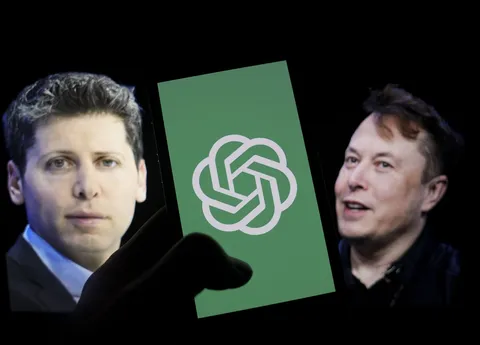
Elon Musk's legal war against OpenAI is intensifying. From rejected source code demands to trade secret lawsuit setbacks and evidence destruction allegations, the showdown heads toward a March jury trial.
The legal war between Elon Musk and OpenAI is escalating rapidly. Once allies on the same ship, the two camps are now crossing swords in court. Source code demands rejected, trade secret lawsuit heading toward defeat, and even allegations of evidence destruction… Three lawsuits are running simultaneously, with new developments every week.
OpenAI dismisses Musk's actions as "baseless litigation and a pattern of ongoing harassment." Meanwhile, Musk's side refuses to back down, stating they will "present all evidence to the jury." How did it come to this?
The Origin of the Grudge: The Man Who Wanted to Be CEO

The bad blood between Musk and OpenAI dates back to 2018. As a co-founder of OpenAI in 2015, Musk sought the CEO position on the board. However, the other co-founders chose Sam Altman, and Musk left the board citing "conflicts of interest with Tesla AI."
That was the official reason, but industry insiders believe his frustration over losing the CEO position was the real cause. Since then, Musk has steadily escalated his criticism of OpenAI.
The decisive moment came in February 2025, when Musk attempted to acquire OpenAI with a $97.4 billion offer. Altman declined with a brief tweet: "no thank you." Musk's fury only deepened.
Lawsuit #1: Nonprofit Promise Violation, March Jury Trial
The core of Musk's first lawsuit, filed in 2024, is "betrayal." He claims he invested approximately $38 million in early funding based on promises that OpenAI would remain "a nonprofit developing AI for humanity."
However, OpenAI established a for-profit subsidiary in 2019 and signed multi-billion dollar investment deals with Microsoft. In October 2025, it completed its transformation into a Public Benefit Corporation.
On January 8, 2026, California federal judge Yvonne Gonzalez Rogers allowed the case to proceed to jury trial, stating there was "sufficient evidence that OpenAI's leadership promised to maintain the nonprofit structure." The trial is scheduled for March.
OpenAI warned investors in a letter that "Musk will make deliberately outlandish claims."
Lawsuit #2: Apple Antitrust and Source Code Demand Rejected

The second front opened in Texas in August 2025, when Musk's xAI filed an antitrust lawsuit against Apple and OpenAI.
The core claim was that "ChatGPT's exclusive integration into iOS disadvantages competing AI like Grok." However, this claim was immediately debunked by X (formerly Twitter) users through Community Notes. They pointed out that DeepSeek reached #1 on the App Store in January 2025, and Perplexity also hit #1 in India.
During the lawsuit, xAI demanded OpenAI's source code, arguing it was needed to "disprove OpenAI's claim that Grok cannot be technically integrated into iOS."
On January 22, 2026, Judge Hal R. Ray Jr. rejected this demand. His reasoning: "Source code is irrelevant to the lawsuit, and we cannot force a competitor to hand over sensitive proprietary information." The judge also expressed frustration, noting that "this case is less than five months old, yet contains over 135 docket entries and countless discovery disputes."
Lawsuit #3: Trade Secret Theft Claim Also Facing Defeat
The third lawsuit was filed by xAI in September 2025, claiming that "OpenAI stole xAI's trade secrets." However, on January 31, 2026, a federal judge signaled that xAI would likely lose.
The problem was a lack of concrete evidence. The court noted that xAI's claims were "closer to speculation."
Latest Development: "They Destroyed Evidence"

On February 3, 2026, OpenAI went on the offensive. They alleged that xAI employees used messaging apps with auto-delete features to destroy evidence.
In court filings, OpenAI claimed "evidence destruction was the intent" and argued that "xAI's actions have put OpenAI at an unfair disadvantage."
Meanwhile, xAI attempted to include Jan Leike, OpenAI's former Head of Alignment (now at Anthropic), as a document custodian, but the court rejected this as well, stating the individual was "irrelevant to the Apple AI integration and has minimal connection to the case."
The Opening Act of AI's Biggest Legal Showdown
The showdown between Musk and OpenAI now heads toward a March jury trial. While the Texas antitrust lawsuit and trade secret case face rejection or defeat, the California nonprofit conversion lawsuit will proceed to trial.
The outcome remains uncertain. But one thing is clear: Musk's vendetta is far from over, and this will be the most dramatic courtroom battle in AI industry history.
- TechCrunch - Elon Musk's lawsuit against OpenAI will face a jury in March
- The Guardian - Musk lawsuit over OpenAI for-profit conversion can go to trial, US judge says
- 9to5Mac - Judge denies Musk's bid to force OpenAI to hand over source code in Apple AI lawsuit
- Bloomberg - OpenAI Accuses Musk's xAI of Destroying Evidence in Court Fight
- Reuters - US judge signals Musk's xAI may lose lawsuit accusing Altman's OpenAI of stealing trade secrets