
Hollywood Halts an AI Video Revolution: ByteDance Suspends Seedance 2.0 Global Launch
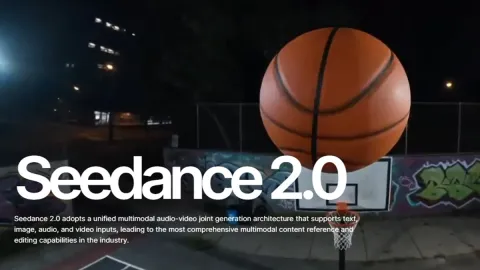
ByteDance has suspended the global launch of Seedance 2.0 indefinitely after Hollywood studios including Disney, Netflix, and the MPA threatened legal action over copyright infringement and deepfake concerns.
On March 15, The Information broke a story that was brief but carried enormous weight: ByteDance has suspended the global launch of its next-generation AI video generation model, Seedance 2.0. Just one month after its domestic launch in China on February 12, the technology that could produce cinema-quality video from a single text prompt has been stopped in its tracks by Hollywood.
A 15-Second Movie from a Single Text Prompt
Seedance 2.0 is ByteDance's next-generation AI video generation model. It accepts text, images, audio, and video as input to generate cinema-quality video clips up to 15 seconds long. The model supports multi-shot composition, native audio generation, physics simulation, and resolutions from 1080p to 2K.
It officially launched in China on February 12 through the Jimeng AI and Doubao apps, with a global API launch planned for late February. The response in China was explosive, but that explosion quickly veered from excitement into controversy.
Tom Cruise vs. Brad Pitt, and Disney's Fury

The situation deteriorated rapidly after the Chinese launch. Users began mass-producing celebrity deepfakes, including a fight scene between Tom Cruise and Brad Pitt, and distributing them across social media. Unauthorized AI videos featuring Marvel and Star Wars characters flooded the internet.
On February 15, Disney moved first. It sent ByteDance a cease-and-desist letter, criticizing Seedance 2.0 for treating Marvel and Star Wars characters like 'royalty-free clipart.' ByteDance promised enhanced copyright protection the next day, but Hollywood's fury had already passed the tipping point.
The MPA's Unprecedented Declaration and Netflix's Litigation Threat
The decisive turning point came from the Motion Picture Association (MPA). The MPA sent what became the first-ever cease-and-desist letter from the entertainment industry to a generative AI company. The letter contained a striking phrase: 'Copyright infringement is a feature, not a bug.' It was a declaration that because the training data itself consists of copyrighted works, infringement is an inherent property of the system.
"Copyright infringement is a feature, not a bug." — Motion Picture Association (MPA), cease-and-desist letter to ByteDance
On February 19, Netflix joined the front lines, threatening 'immediate litigation.' The streaming giant cited infringement of its IP including Stranger Things, Squid Game, and Bridgerton. Paramount, Warner Bros., Sony, and Universal followed with their own legal threats.
A Month Under Siege, Then the White Flag
Here is the timeline of events from mid-February through mid-March:
| Date | Event |
|---|---|
| Feb 12 | Seedance 2.0 officially launches in China (Jimeng AI, Doubao app) |
| Mid-Feb | Celebrity deepfake videos go viral; unauthorized Hollywood IP generation surges |
| Feb 15 | Disney sends cease-and-desist letter |
| Feb 16 | ByteDance promises enhanced copyright protection |
| Mid-Feb | MPA sends first-ever cease-and-desist to a generative AI company |
| Feb 19 | Netflix threatens 'immediate litigation' |
| Feb-Mar | Paramount, Warner Bros., Sony, Universal signal legal action |
| Mar 15 | The Information reports: ByteDance decides to suspend global launch |
According to The Information's March 15 report, ByteDance has decided to suspend the global launch indefinitely. The global API release, originally planned for late February, has been postponed with no new timeline. Legal and engineering teams are focused on building IP protection systems. BytePlus, ByteDance's overseas business arm, is reportedly leading the effort to enhance copyright protection and deepfake defense mechanisms.
The EU AI Act: Another Variable in the Equation
Beyond Hollywood's legal pressure, ByteDance faces additional regulatory headwinds from the EU AI Act. The regulation imposes obligations on generative AI models to disclose training data sources and comply with copyright requirements. If Seedance 2.0 were to proceed with a global launch, ByteDance would face both U.S. litigation risks and European regulatory risks simultaneously.
ByteDance's decision to pause the global launch ultimately reflects not just a dispute with Hollywood, but the complex web of global regulatory pressures confronting generative AI.
A Window of Opportunity for Competitors
The competitors most pleased by Seedance 2.0's global absence are OpenAI's Sora and Runway ML, which now have additional time to solidify their market positions before Seedance 2.0 enters the arena. This represents the first major copyright dispute in the generative AI video space, and its outcome will directly influence competitors' strategies.
However, Sora and Runway face the same copyright risks. Seedance 2.0 became the first target because its technology reached a quality threshold capable of convincingly replicating Hollywood IP, not because this is a problem unique to ByteDance.
The First Ice Age of AI Video Generation Has Begun
The Seedance 2.0 saga marks a turning point for AI video generation. The moment the technology became 'good enough,' law and industry stepped in to halt it — the first such case in this field. Whether ByteDance can complete its IP protection systems and return to the global market, or whether copyright barriers will slow the growth of the entire AI video generation industry, remains to be seen.
What is clear is this: AI video generation is no longer at the 'tech demo' stage. It has become a real-world technology in direct collision with a multi-billion-dollar content industry. And the outcome of that collision will rewrite the rules of the entire sector.
- TechCrunch - ByteDance reportedly pauses global launch of its Seedance 2.0 video generator
- Variety - Netflix Threatens ByteDance With 'Immediate Litigation' Over Seedance AI
- Hollywood Reporter - MPA Sends First-Ever Cease-and-Desist to a Generative AI Company
- NewsBytes - Legal disputes halt ByteDance's Seedance 2.0 global launch
- ByteDance Official - Official Launch of Seedance 2.0