
Xbox Being Sunsetted? Co-Founder Speaks Out on Microsoft's AI Obsession
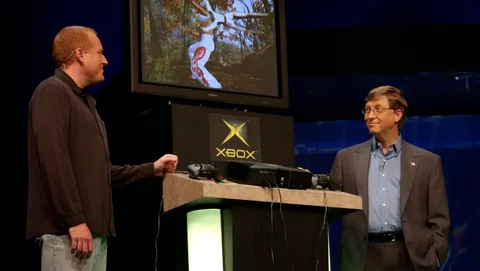
Xbox co-founder Seamus Blackley has publicly warned that Microsoft is sunsetting Xbox. From Phil Spencer's retirement and an AI executive taking over as CEO to exclusives going multiplatform, we examine Xbox's deepening crisis.
Xbox co-founder Seamus Blackley has issued an unprecedented warning about Microsoft's Xbox business. In an interview with GamesBeat, he declared that "Xbox is being phased out" and pointed to Microsoft's aggressive pivot toward AI as evidence that the company is quietly winding down its gaming operations. Phil Spencer's sudden retirement, the appointment of an AI executive as gaming chief, and the cascade of former exclusives going multiplatform suggest something far deeper than a simple strategic adjustment.
A Founder's Warning: 'Sliding Xbox Quietly Into the Night'

Seamus Blackley was instrumental in launching the original Xbox in 2001. The fact that he is now publicly warning about the demise of the brand he helped create speaks volumes about the severity of the situation. In his GamesBeat interview, Blackley stated that "Xbox is being phased out, like many businesses that are not core AI businesses," adding that "they won't say that, but that's what's happening."
His characterization of new gaming CEO Asha Sharma was particularly striking. He described her incoming role as that of "a palliative care specialist whose job is to slide Xbox quietly into the night." He also took aim at CEO Satya Nadella, saying he "has the hammer of generative AI and everything looks like a nail," and criticized the company for "subordinating a proven, enormous business to the strategy of an unproven business."
Leadership Upheaval: An AI Executive Takes the Gaming Helm

On February 20, 2026, Microsoft's gaming division underwent an unprecedented leadership shakeup. Phil Spencer, who spent 38 years at Microsoft and led Xbox for 12 of them, announced his retirement. This came just months after he had said he wasn't planning to retire anytime soon. Even more shocking was the departure of Sarah Bond, Xbox President and COO, who had been widely considered the heir apparent. Blackley called her "the person I feel worst for," noting she was "very good from a leadership standpoint and was an actual gamer."
Her replacement is Asha Sharma, who comes not from the gaming industry but from Microsoft's CoreAI products division, now appointed as gaming EVP and CEO. Fast Company described the move as Microsoft "handing the Xbox keys to an AI exec." Blackley cut to the heart of it: "You're going to trust games to who? The games people? No." While Matt Booty was named EVP and CCO to oversee game studios, ultimate decision-making authority now rests with an AI-background CEO.
The End of Exclusivity: Even Halo Goes to PS5

The exclusive game strategy that once defined Xbox's identity has effectively been dismantled. Sarah Bond herself described the concept of exclusivity as "antiquated," and the philosophy was put into action. Doom: The Dark Ages, Hellblade 2, Forza Horizon 5, Indiana Jones, Flight Simulator 2024, Oblivion Remastered, and Gears of War Reloaded have all been ported or confirmed for PS5.
The decisive blow came when Halo: Campaign Evolved was confirmed for PS5, marking the franchise's first-ever appearance on PlayStation. IGN called it "the final nail in the coffin for the Xbox exclusive." With Starfield also headed to PS5 in 2026, the reasons to buy an Xbox console specifically are rapidly evaporating.
Xbox by the Numbers: Hardware Sales Plunge 70%

The numbers tell an unambiguous story. In 2025, Xbox Series S/X sold approximately 1.7 million units. Compare that to the Nintendo Switch 2's 10.36 million and the PS5's 9.2 million units in the same period, and the gap is staggering. In November 2025 alone, Xbox hardware sales plummeted 70% year-over-year, with hardware revenue declining roughly 30% annually for two consecutive years. CNBC reported that "Xbox is losing the console race by miles."
Financial results paint an equally bleak picture. Gaming revenue fell approximately 9.5% in FY26 Q2. While Game Pass has 34 million subscribers, its Ultimate tier price was hiked 50% from $19.99 to $29.99, and a 30% profit margin target has been imposed, more than double the 12% margin recorded in 2022. Console hardware prices were raised twice in 2025 alone, with the Series S jumping from $299 to $399 and the Series X from $499 to $649.
The Restructuring Wave: Studio Closures and Mass Layoffs
Microsoft's gaming contraction is starkly visible in its workforce. In January 2024, 1,900 employees (9% of the gaming division) were laid off, followed by an additional 650 in September. Studios under Bethesda, including Arkane Austin, were shuttered, and in July 2025, long-term projects like Perfect Dark and Everwild were cancelled.
At GDC 2026, only 20% of developers surveyed chose Xbox as a priority platform, a damning reflection of these trends. Former Microsoft executive producer Laura Fryer assessed that the company "no longer seems to have the will to ship hardware." Losing developer support in a console ecosystem may be an even more critical warning sign than declining user numbers.
Microsoft's Rebuttal: 'Recommitting to Core Fans'
Microsoft has pushed back. New CEO Asha Sharma declared upon taking office that she would "recommit to core Xbox fans" and vowed not to allow "soulless AI slop." Satya Nadella stated "I am long on gaming," signaling continued investment. The company officially reaffirmed it is "not abandoning console," and reports indicate a next-generation Xbox powered by an AMD SoC is in development for a 2027 launch.
But the market remains skeptical. Forbes' Paul Tassi wrote that "Xbox is too far down a rabbit hole for huge changes under a new CEO." The wider the gap between words and actions, the weaker the credibility of official statements becomes. Releasing marquee exclusives to competitors while simultaneously championing a hardware future reads as contradictory.
The 2027 Next-Gen Console: A Turning Point or a Final Farewell?
Whether Seamus Blackley's warning proves to be hyperbole or prophecy, only time will tell. What is clear is that today's Xbox is drifting further from the vision its founders once championed. The collapse in hardware sales, the dismantling of exclusivity, and the arrival of AI-centric leadership might each be defensible as rational business decisions in isolation, but taken together they all point in one direction.
The interpretation that Microsoft is pivoting toward a service-platform model centered on Game Pass is no longer novel. The real question is what constitutes Xbox's core brand value and whether there is genuine will to preserve it. Whether the next-generation console expected in 2027 marks a turning point or becomes, in Blackley's words, a final farewell remains to be seen.

- GamesBeat - What an Xbox founder thinks of the new Xbox CEO
- Forbes - Xbox Is Too Far Down A Rabbit Hole For Huge Changes Under New CEO
- Fast Company - Microsoft just handed the Xbox keys to an AI exec
- Windows Central - Xbox co-founder questions Microsoft AI pivot
- CNBC - Xbox is losing the console race by miles
- IGN - Halo: Campaign Evolved Is the Final Nail in the Coffin for the Xbox Exclusive