
Nano Banana 2 Launches: Pro-Level Image Generation at Flash Speed and Price
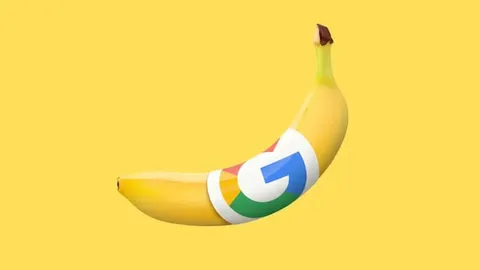
Google has launched Nano Banana 2, powered by Gemini 3.1 Flash. Delivering image quality rivaling Nano Banana Pro at dramatically faster speeds and lower costs, it is being hailed as a game changer poised to reshape the AI image generation market.
Google has set a new standard for AI image generation. With the launch of Nano Banana 2, powered by Gemini 3.1 Flash, pro-level quality is now available at Flash speed and pricing. Google began rolling out the model to users on February 26.
The Nano Banana series is the fastest-growing lineup among Google's image generation models. The original Nano Banana showed potential, Nano Banana Pro proved its mettle by reaching second place on LMArena, and now Nano Banana 2 goes further -- matching Pro and even surpassing it in certain areas -- while declaring its mission: democratizing pro-level performance.
The Nano Banana Lineage: From Obscurity to the Top

Nano Banana's journey is remarkable. What started as an internal Google codename has become synonymous with AI image generation. The first Nano Banana (Gemini 2.5 Flash Image) drew attention for its speed and respectable quality. Nano Banana Pro then cemented the brand's reputation by scoring 1,238 on LMArena, just behind GPT Image 1.5 HF at 1,247.
Nano Banana 2's official name is Gemini 3.1 Flash Image. The key word is 'Flash.' Despite being based on a Flash model rather than a Pro model, it achieves quality that rivals Pro and, in some areas, even surpasses it. This signals significant advances in Google's model optimization and compression techniques.
Flash-Based Pro Performance with High-Resolution Output

Nano Banana 2's greatest strength is its balance of performance and efficiency. Built on the Gemini 3.1 Flash architecture. Leaked information suggests it may support native 4K resolution -- generating at 4K from the start rather than upscaling -- which, if confirmed, would represent a meaningful leap in detail and sharpness.
Compared directly to Nano Banana Pro, overall quality is comparable while speed is dramatically faster. In areas where AI image generation has traditionally struggled -- text rendering, complex compositions, and realistic human portraiture -- testers report that Nano Banana 2 actually outperforms Pro. The lightweight structure inherent to Flash models drastically reduces image generation time as well.
The model has been spotted in the Vertex AI catalog, and it has been tested on Arena.ai under the anonymous handle 'anon-bob-2,' receiving strong ratings.
An AI Image Pricing Revolution: Flash Rewrites the Economics

Pricing is Nano Banana 2's true weapon. With Google's premium image models currently priced at roughly $0.06 per image and GPT Image 1.5 at $0.167, the Flash-based model is expected to come in even cheaper. That means pro-level quality at less than half the cost.
The implications stretch from individual creators to large-scale enterprise applications. Services that previously limited their use of AI image generation due to cost can now seriously consider full adoption. In sectors requiring mass image generation -- e-commerce, gaming, advertising -- this price advantage becomes a decisive differentiator.
The AI Image Generation Competitive Landscape

The AI image generation market has never been more competitive. On LMArena, GPT Image 1.5 HF leads at 1,247, with Nano Banana Pro at 1,238 in second. Midjourney v7, Flux Kontext, and Seedream 5.0 are all pressing their own advantages.
Nano Banana 2 carves out a unique position in this landscape. Rather than competing for the absolute quality crown, it declares a 'best value' war. Quality that matches or even exceeds Pro in certain areas, Flash speed, and aggressive pricing -- no other model currently delivers all three simultaneously.
Industry reaction has been enthusiastic. The consensus: "Pro-level quality at Flash speed and price is a game changer." Especially for API-based mass generation scenarios, Nano Banana 2's value proposition is in a league competitors will struggle to match.
Rollout Begins February 26: Sequential User Access
Google began rolling out Nano Banana 2 to users on February 26. The model has been confirmed in Google's Vertex AI catalog, and blind testing on Arena has already shown strong user preference. Access is expected through both the Gemini app and API.
Google's deployment strategy is noteworthy: a 'trickle-down' approach. First, establish Nano Banana Pro at the top to prove technical prowess. Then bring that quality down to the Flash tier for mass adoption. A two-track approach: demonstrate with premium, dominate with efficiency.
Democratizing Pro-Level Performance: Nano Banana 2's Declaration
The launch of Nano Banana 2 signals a new phase in AI image generation. The highest quality alone is no longer the sole competitive edge. How quickly and affordably you can deliver 'good enough' quality is what decides the winner.
Google is leading this direction with the Nano Banana series. The democratization of pro-level performance -- that is the message Nano Banana 2 delivers. A declaration to transform AI image generation from an exclusive tool for premium users into an everyday instrument for every developer and creator.

- Reddit r/Bard - Nano Banana 2 is real! Gemini 3.1 Flash Image just appeared in Vertex AI Catalog
- VentureBeat - Google's Nano Banana 2 brings Pro-quality image gen to Flash tier
- 36kr - Nano Banana 2 Leak: Everything You Need to Know
- Computerworld - Nano Banana 2: Google's Flash-based image model redefines price-performance
- 36kr - Google Gemini 3.1 Flash Image Generation Nano Banana 2 analysis