
OpenAI's Next Model GPT-5.4 Launch Imminent: Already Being Silently Deployed?
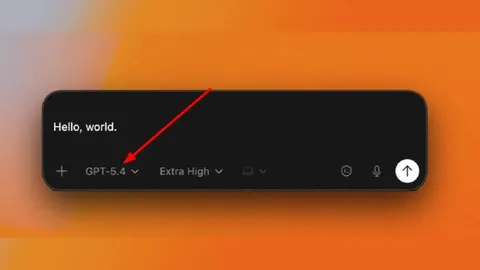
GPT-5.4 was leaked twice from OpenAI's Codex GitHub repository, revealing that the next model launch is imminent. Meanwhile, AI communities are reporting that GPT-5.2 Pro's responses have already been quietly changing.
OpenAI's next model, GPT-5.4, has been leaked twice on GitHub. As new features like full-resolution vision and Fast mode came to light, an employee's accidental screenshot of the model picker further confirmed that launch is just around the corner. At the same time, AI communities are reporting that GPT-5.2 Pro has already been quietly changing.
OpenAI is shipping models at a record pace, yet users are voicing frustrations beyond raw performance numbers. Here's a look at the gap between benchmark dominance and user experience, and the story behind models that change without notice.
1. GPT-5.4 GitHub Leak: What Two Mistakes Revealed

The first leak occurred on February 27, 2026 in OpenAI's Codex CLI repository. PR #13050, which added full-resolution vision support, had the minimum model version set to (5,4). OpenAI caught the mistake and force-pushed seven times over five hours to scrub the commit history, but multiple developers had already captured screenshots.
The second leak came just days later on March 2. PR #13212 contained a description string for a /fast slash command reading "Fast mode toggle for GPT-5.4." This too was removed within three hours, but the community had already secured the evidence.
To make matters worse, OpenAI employee Tibo accidentally posted a screenshot on X (formerly Twitter) showing GPT-5.4 in the model picker UI before hastily deleting it. OpenAI responded to all these leaks with nothing more than code cleanup and post deletions, offering no official comment. The fact that three separate incidents all point in the same direction makes it clear that GPT-5.4 development is well underway.
2. New Features Confirmed by the GPT-5.4 Leak

The most notable feature in the leaked code is full-resolution vision. It will allow PNG, JPEG, and WebP images to be processed at their original resolution without compression. Current GPT models downscale images before analysis, and removing this limitation would be a game-changer for tasks requiring high resolution, such as HiDPI screenshot analysis, architectural blueprint reading, and medical imaging.
Fast mode was also confirmed. A /fast slash command will let users toggle speed-priority responses, allowing them to choose quick answers over detailed ones when the situation calls for it. This mirrors Anthropic Claude Code's Fast mode, reflecting a broader industry trend.
Unconfirmed rumors also persist. These include a 2-million-token context window and cross-session persistent memory. Given that GPT-5.2's current context is 256K tokens, this would represent roughly an eightfold leap and would be an overwhelming advantage over competitors if realized. However, these remain unverified rumors and should be treated with caution.
3. Silent Updates: Changes the Community Detected First
Separate from the GPT-5.4 leak, AI communities have been reporting that GPT-5.2 Pro's responses have already changed. Claims of higher scores on independent benchmarks have been accompanied by observations that the model's response structure and tone have subtly shifted. The suspicion is that OpenAI has been quietly improving the model without any announcement.
Silent updates from OpenAI are nothing new. In September 2025, a safety routing system was introduced without notice, causing automatic model switching. In December of the same year, the model router was rolled back. In January 2026, Thinking time was reduced and accidentally dragged Extended mode down with it, a mistake that wasn't corrected until February.
This pattern shows that OpenAI has been consistently alternating between "major branded launches" and "quiet internal improvements." For users, the inability to know when or how the model they're using has changed is becoming a trust issue.
4. The Disconnect Between GPT-5.2 Pro Benchmarks and User Frustration

GPT-5.2 Pro's benchmark numbers are impressive. It scored 100% on AIME (mathematical reasoning), 54.2% on ARC-AGI-2 (general reasoning), and 93.2% on GPQA Diamond (graduate-level science), hitting top marks across most benchmarks. By the numbers alone, it's arguably the most powerful AI model ever released.
User reception, however, tells a different story. Complaints about the model being "cold and rigid" and "impossible to use for creative work due to excessive censorship" have been pouring in. The auto-routing system has been a particular pain point, with users noting that the same question yields different quality responses each time. Pro subscribers are paying a premium yet can't predict which model will actually respond.
Competitive pressure lies at the heart of this disconnect. After Google Gemini's launch, ChatGPT's daily visitors began declining, while Anthropic's Claude gained acclaim in coding and creative tasks. A reported internal "Code Red" at OpenAI led to rushed model releases, resulting in a focus on benchmark numbers over UX. CEO Sam Altman himself acknowledged at a developer town hall that "we made mistakes," admitting the company had focused too heavily on technical performance at the expense of user interaction quality.
5. GPT Release Roadmap: Is It 5.3 or 5.4 Next?
OpenAI's release roadmap is currently in a somewhat confusing state. The coding-focused GPT-5.3-Codex shipped on February 5, but a general-purpose GPT-5.3 has yet to materialize. Now the leaks have confirmed that GPT-5.4 already exists internally. The possibility that OpenAI might skip a general-purpose 5.3 entirely and jump straight to 5.4 can't be ruled out.
It's also unclear whether the "significantly improved model over GPT-5.2 within Q1 2026" that Sam Altman mentioned refers to 5.3 or 5.4. On the Manifold prediction market, GPT-5.4 is given a 55% chance of launching before April and 74% before June, suggesting the market expects a relatively early release.
OpenAI's pattern of testing under codenames on the LMSYS Chatbot Arena is also worth watching. Previous models were tested under codenames like "zenith" and "summit" before their official launches, and new codenames "vortex" and "zephyr" have recently been spotted. Whether these represent GPT-5.4 testing remains unconfirmed, but something is clearly in the pipeline.
Closing Thoughts: OpenAI's Speed Race
OpenAI's model release cadence is accelerating. From GPT-5 (August 2025) to 5.1 (November), 5.2 (December), 5.3 Codex (February 2026), and now the 5.4 leak (March), the company has pushed through four major updates in just seven months, with a fifth on the horizon.
The question is whether this speed race is translating into better user experiences. The models are hitting all-time highs on benchmarks, yet "perceived performance" is arguably declining. With Google Gemini and Anthropic Claude closing in, the pace may be unavoidable. But if OpenAI wants to avoid repeating what Sam Altman himself called "our mistakes," it will need to listen beyond the benchmark numbers and pay attention to the user experience.

- Awesome Agents AI - GPT-5.4 Leaked in OpenAI's Codex Repository
- Piunika Web - OpenAI GPT-5.4 accidentally leaked via Codex
- Eonmsk - Leaks Suggest OpenAI GPT-5.4 Launch Is Imminent
- Geeky Gadgets - OpenAI GPT-5.4 Leak
- FelloAI - GPT-5.2 Is a Monster on Benchmarks. So Why Do Users Hate It?
- TechRadar - ChatGPT 5.2 branded a step backwards by disappointed early users
- OpenAI - Introducing GPT-5.2
- OpenAI Help Center - ChatGPT Release Notes