
OpenAI Drops 'Side Projects' to Go All-In on Coding and Enterprise

OpenAI officially abandons its 'do everything at once' strategy to focus on coding and enterprise. CEO Fidji Simo called Anthropic's success a 'wake-up call' at an all-hands meeting, declaring the goal of converting 920 million ChatGPT users into high-compute customers. Projects like Pulse, medical AI agents, and ad tools are being shelved.
OpenAI has officially abandoned its 'do everything at once' strategy. According to a Wall Street Journal report on March 16, Fidji Simo, OpenAI's CEO of applications, announced a pivot to coding and enterprise at an all-hands meeting. So-called 'side projects' including the Pulse personal assistant, medical AI agents, and advertising tools are being shelved.
The direct catalyst for this strategic shift is Anthropic's rapid growth. Simo described Anthropic's B2B success as a "wake-up call," declaring that converting ChatGPT's 920 million users into high-compute customers is the top priority.
Simo's All-Hands: We Cannot Be Distracted by Side Projects

We cannot miss this moment because we are distracted by side quests. Our opportunity now is to take those 900 million users and turn them into high-compute users. — Fidji Simo, OpenAI CEO of Applications
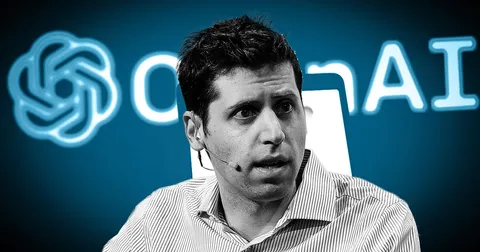
According to WSJ, Simo delivered a decisive message at the all-hands meeting: focus on productivity, especially productivity tools for business customers. CEO Sam Altman and CTO Mark Chen are also reviewing projects to deprioritize, with affected teams to be notified within weeks.
Three projects have been confirmed as shelved: Pulse, a personalized morning briefing service; a medical AI agent for clinical assistance; and advertising tools that had already gone through two cycles of launch and cancellation. The ad tools were first paused in December 2025, resumed in January 2026, and are now paused again in March.
GPT-5.4 and Codex: The Numbers Aren't Bad
Behind the pivot are strong numbers from core products. On March 16, Greg Brockman revealed that GPT-5.4 was processing 5 trillion tokens per day just one week after launch, exceeding OpenAI's entire API throughput from a year ago. Net new annual recurring revenue has reached $1 billion.
Codex growth is equally impressive. According to Sam Altman, weekly active users have more than tripled since early 2026. The Mac app, launched on February 2, hit 1 million downloads within its first week, establishing a growing presence in the coding agent market.
However, ChatGPT's user count stands at 920 million, falling short of the 1 billion target. This explains Simo's emphasis on quality over quantity. Converting existing users to paid plans and increasing their usage matters more than growing headcount.
Anthropic's Chase Triggered Code Red and the B2B War

The roots of this strategic shift trace back to 'Code Red' in December 2025. While the official trigger was Google's Gemini 3, the real cause was Anthropic's dominance in B2B and coding markets. Enterprise coding market share showed Anthropic at 42% versus OpenAI's 21%, a two-to-one gap.
The revenue gap is closing fast. OpenAI's annualized revenue stands at $25 billion (as of February 2026), while Anthropic has reached $19 billion. Claude Code alone generates $2.5 billion, and CEO Dario Amodei openly states 'we're an enterprise business.' Eighty percent of Anthropic's revenue comes from API and enterprise customers, and they haven't even released image or video models — a deliberate focus strategy.
Since Code Red, OpenAI has shipped GPT-5.2, 5.3-Codex, and 5.4, all emphasizing coding performance improvements. This side project cleanup extends that trajectory by reallocating organizational resources entirely toward coding and enterprise.
The Entire AI Industry Is Pivoting to B2B
This isn't just an OpenAI phenomenon. The entire AI industry is shifting from consumer chatbots to enterprise productivity tools. On March 12, xAI ousted a coding-focused co-founder and recruited two key hires from Cursor, restructuring its coding agent strategy. It's essentially starting over from scratch.
The sole exception is Google. Thanks to its advertising-based revenue structure, Google continues expanding consumer services through Gemini. Only Google can justify consumer-facing AI investment by treating it as an evolution of search advertising.
OpenAI aims to raise its enterprise revenue share from 40% to 50%. The consumer side will lean on advertising revenue models. Ultimately, this is OpenAI declaring it's no longer an exception to the massive shift from 'AI that talks' to 'AI that works.'
Only the Main Quest Remains: OpenAI's Pre-IPO Gambit
OpenAI's abandonment of side projects isn't just a project cleanup. It signals the AI industry's transition from 'conversational AI' to 'working AI.' Despite an overwhelming 920 million ChatGPT users, Anthropic's B2B focus has created a scenario where revenue overtake is plausible, and that reality forced OpenAI's hand.
Recovering coding agent market share, securing enterprise customers, and proving profitability ahead of an IPO — OpenAI's to-do list is extensive. Having dropped the side projects, it's now time to deliver results on the main quest.

- Reuters (WSJ) - OpenAI to cut back on side projects to focus on core business
- CNBC - OpenAI preps for IPO in 2026, says ChatGPT must be productivity tool
- The Information - OpenAI tops $25 billion annualized revenue; Anthropic narrows gap
- TechCrunch - Musk's xAI is starting over again, again
- The Decoder - OpenAI reportedly ditches its side quests strategy