
Microsoft's Project Solara: Agents, Not Apps
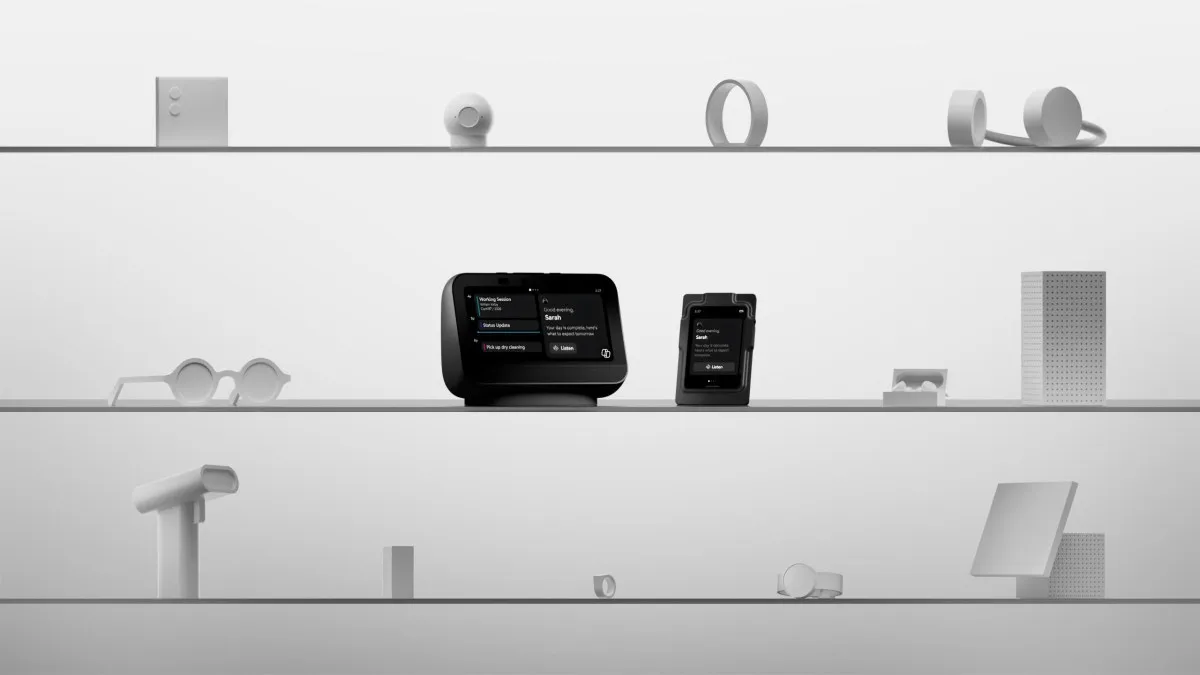
At Build 2026, Microsoft introduced Project Solara — a chip-to-cloud platform for devices that run AI agents instead of apps, built on Android, not Windows.
Microsoft introduced Project Solara, a new device platform, at its Build 2026 developer conference in San Francisco on June 2. Designed to run AI agents instead of traditional apps, the Project Solara platform is built on Android rather than Windows and spans from chip to cloud.
Stevie Bathiche, corporate vice president of Microsoft's Applied Sciences Group, demonstrated the platform with two concept devices: a desk hub and a wearable badge. Microsoft does not plan to manufacture or sell these devices directly, offering them instead as reference designs for hardware partners.
Replacing the App Model with AI Agents

The idea behind the Solara platform is to strip away traditional apps and graphical interfaces, replacing them with a system-level agent that users summon to complete tasks. "Boundaries are collapsing," Bathiche said. "You do not necessarily need the traditional app model or the conventional methods of building user experiences."
To power small, low-power devices, Microsoft chose the Microsoft Device Ecosystem Platform (MDEP) over Windows. MDEP is an enterprise-hardened build of Android that Microsoft already deploys in Teams meeting room hardware. Choosing MDEP lets Solara run on lighter devices while keeping the security and management features IT teams expect: automated patching, over-the-air updates, device integrity checks, Windows Defender, Intune, and Entra ID sign-in.
The Solara platform spans from local silicon to the cloud. A lightweight OS runs on the device, while Microsoft Azure manages the state and orchestration of the AI agents. A single device can host multiple agents at once, guided by a coordination layer that picks the appropriate agent for each task. Users decide which AI agents to run; Microsoft 365 Copilot ships by default, but the Solara platform is built to support third-party agents.
Inside the Concept Devices: The Desk Hub and Badge

These two concept devices show what the Project Solara platform looks like in practice. The first is a desk hub that sits beside a PC. The device responds to voice commands, signs the user in with facial recognition, and surfaces the day's priority tasks. Attach a monitor and the hub becomes a full Windows machine running in the cloud.
The second concept reimagines the corporate ID badge as a wearable device. Pressing its fingerprint sensor wakes the AI agent, and a single tap records a conversation and transcribes it instantly. A built-in camera lets the agent see what the wearer sees.
In a clinical demo, the badge scanned a patient's QR code, transcribed the visit, logged vital signs, and started a prescription draft. Pointed at a whiteboard during an office-redesign brainstorm, the same badge suggested adding indoor plants. Bathiche stressed that the healthcare scenario was a concept demonstration, not a certified clinical tool.
In the coming months, partners including Target, CVS Health, Best Buy, Levi's, and AccuWeather are scheduled to pilot Solara devices based on these reference designs (GeekWire).
An Open Hardware Ecosystem on Azure
Microsoft has no plans to enter the hardware market with these devices itself. Commercializing the designs is left to hardware makers and enterprise partners. To keep costs down and speed development, the prototypes use off-the-shelf silicon: the badge runs on a new Qualcomm wearable chip, the desk hub on a MediaTek IoT chipset.
Microsoft says the approach is already efficient. Because the software is MDEP-based, the team ported the MDEP build to a different vendor's chipset and had the badge running in just three days. How the Project Solara platform will make money is still unsettled. Beyond the fact that the devices run on Azure, Bathiche said the economics are still taking shape.
The category is suddenly crowded. Google and Amazon are each building rival AI agents and hardware, while OpenAI is working with Jony Ive on a new device. OpenAI's rumored AI phone is also expected to use MediaTek and Qualcomm chips, overlapping with the Project Solara supply chain. Microsoft is careful to frame all of this as an early concept, not a finished product.
Project Solara runs counter to Microsoft's recent move to scale back Copilot across Windows. That Nadella personally pushed for a Build reveal far earlier than usual underscores how fast the race is moving. As Bathiche put it, the question is which device will become the next one that comes closer to you.

- Microsoft Command Line - Composing a new platform for agent-first devices
- GeekWire - Inside Microsoft's Project Solara: A new platform for devices that run AI agents instead of apps
- The Verge - Microsoft's Project Solara is an OS for AI agent gadgets
- Ars Technica - Microsoft's Project Solara is an Android OS designed for agents instead of apps
- Engadget - Microsoft announces Project Solara, its take on an AI agent platform