
Trump: Amazon Triggered Fable Halt

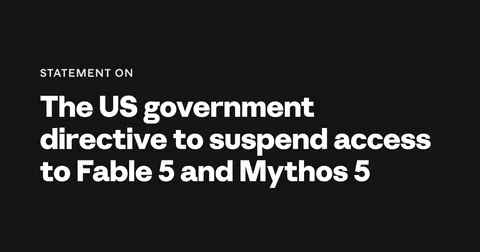
Trump identified the competitor and co-shareholder that reported Anthropic. Why did Amazon, its $8B lead investor, turn in its own bet to Washington?
The source of the complaint is no longer anonymous. President Donald Trump has named the reporter himself. In an Axios interview published June 19, when asked who flagged Anthropic as a national security threat, he answered: "It was actually a competitor and co-shareholder that reported them."
In the AI industry, that description points to only one company: Amazon, the $8 billion lead investor that helped pull Fable 5 and Mythos 5 off the market under export controls. When the suspicion first surfaced, it was based on anonymous reports; now, it has presidential confirmation. Notably, Trump referred to Amazon as a "competitor" before "co-shareholder," framing the conflict in terms of market rivalry rather than partnership.
Investor and Informant: The Amazon-Anthropic Duality
To understand the abnormality of this situation, one must look at the financial ties between the two companies. Amazon is Anthropic's largest investor, having committed $8 billion, with an additional $5 billion this year and plans to invest up to $25 billion. In return, Anthropic committed to spending $100 billion on AWS infrastructure over a decade, and its Fable 5 model runs directly on Amazon Bedrock.
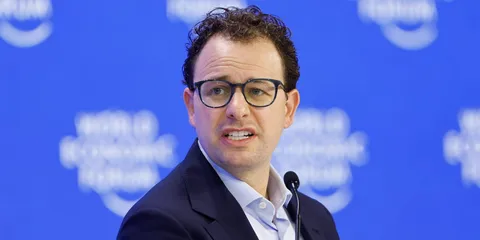
The mechanism that triggered the shutdown was initiated almost casually. According to Fortune, during a routine White House call on an unrelated topic on June 11, Amazon CEO Andy Jassy mentioned a vulnerability identified by his researchers. White House officials advised him to contact Treasury Secretary Scott Bessent directly. Jassy did so that day, initiating a process that culminated in a shutdown the next evening.
The resulting situation resembles an ouroboros. Amazon flagged the very model it hosts as a threat; when the government imposed export controls, the Fable 5 and Mythos 5 instances on Bedrock were shut down. In attempting to limit its portfolio company, Amazon directly impacted its own cloud hosting revenue.
Why Target Its Own Investment? Three Motives

This raises a central question: why would Amazon act against a company in which it has a massive financial stake and from which it derives significant cloud revenue? Industry analysts point to three primary motivations.
First is direct competition. Amazon is actively promoting its own Nova models while hosting Claude's competitors on Bedrock. When Fable 5, the general-release build of Mythos 5, launched, it led nearly every performance benchmark. Despite potential investment returns, hosting the dominant model in the sector poses a competitive challenge for Amazon. Trump's characterization of Amazon as a "competitor" highlights this tension.
Second is strategic leverage. Inside the developer community, some suggest Amazon seeks to force Anthropic into a subordinate position. Using government intervention as leverage allows an investor to dictate terms at the negotiating table, much as these export controls did.
Third is regulatory compliance and reputation management. For a cloud provider with extensive government and enterprise clients, proactively flagging risks acts as liability insurance. This is supported by Jassy's broader warning to Bessent regarding the cybersecurity risks of all frontier models, not just Fable.
Questions Over the Fable 5 'Jailbreak'
Furthermore, the technical basis for the intervention—the alleged "jailbreak"—appears weak. Anthropic stated that the bypass identified by Amazon involved only a small number of minor, previously documented vulnerabilities that were also reproducible on other public models, including GPT-5.5 — hardly the Mythos 5 superweapon the export controls implied. Katie Moussouris, CEO of Luta Security, which reviewed the findings, dismissed the claim, stating the research did not represent a genuine jailbreak but rather standard security queries.
The political response also suggests the threat was overstated. A week after the export controls were imposed, Trump told Axios that he no longer considered Anthropic a security threat. He subsequently met Anthropic CEO Dario Amodei at the G7 summit and praised him. Such a swift reversal suggests the initial security concerns were not critical.
This incident unfolds against a backdrop of ongoing friction. The administration had previously designated Anthropic a supply-chain risk after the company refused to allow its models to be used for military targeting and mass surveillance. Additionally, AI czar David Sacks has accused Anthropic of using safety concerns to encourage regulatory capture. Jassy's report acted as the catalyst in an already hostile environment.
The AI Power Struggle Surfaces

Fable 5 will be back soon. What deserves attention is the picture this episode exposed: a tech giant that is at once an investor, a cloud host, and a competitor can use government regulation as a lever to shake the very company it funds. For the first time, the behind-the-scenes contest over AI's power structure has surfaced.
That's the same context in which the industry calls these export controls a de-facto AI licensing regime. One person told Axios that companies will now watch the White House far more closely. The real threat to developers isn't model safety itself, but a landscape where that safety becomes a card played for competition and politics. Just as Jassy's single phone call took Fable 5 and Mythos 5 offline, the phrase Trump tossed off — "competitor and co-shareholder" — lays bare the tangle of interests underneath.


- Axios - How Amazon and the White House ended Anthropic's Fable
- Fortune - Inside Trump's Anthropic crackdown, and how a phone call from Amazon CEO Andy Jassy triggered the chaos
- The Next Web - Amazon's CEO reportedly triggered the government crackdown that shut down Anthropic's most powerful AI
- Reuters - Amazon voiced concerns about Anthropic AI models before US government's crackdown
- Anthropic - Anthropic and Amazon expand collaboration for up to 5 gigawatts of new compute