
Warsh's Fed Casts AI as 'American Ingenuity'
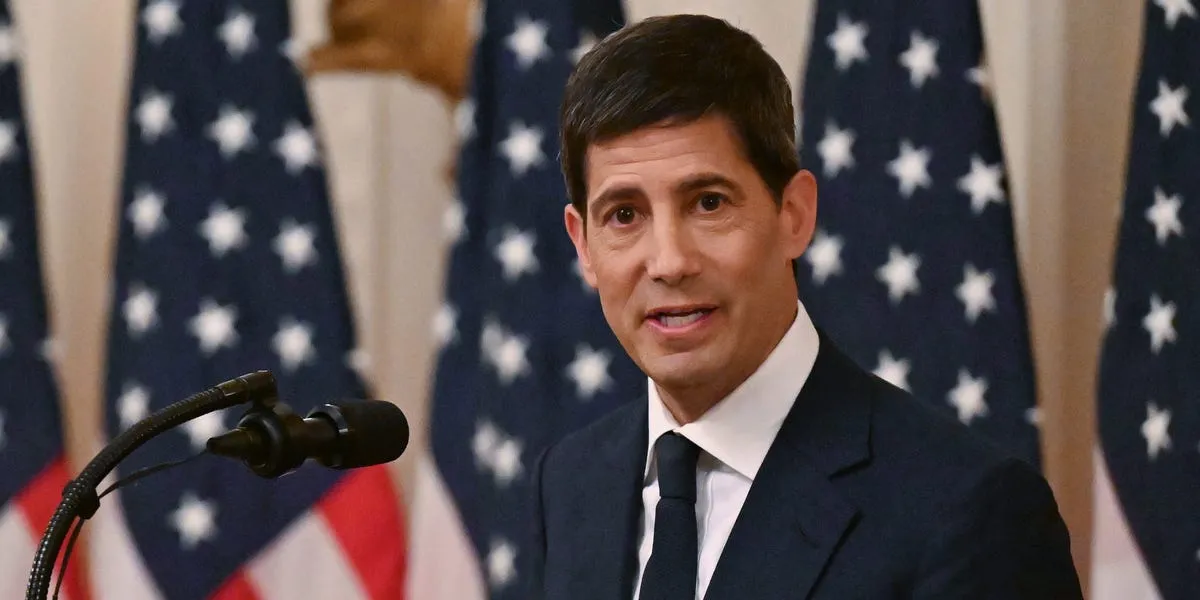
At his first FOMC meeting, new Fed Chair Kevin Warsh framed AI as 'American ingenuity,' betting productivity gains can tame inflation.
Kevin Warsh wanted his first message as Federal Reserve chair to be unmistakable. "You may have heard me say before that AI is shorthand for American ingenuity," he told reporters on June 17, moments after the Federal Open Market Committee (FOMC) held its benchmark rate at 3.5%–3.75%. The line was vintage Warsh.
It is a striking declaration from the person who sets the price of money in the United States. For a central banker, calling a single technology a once-in-a-generation opportunity is no throwaway remark. It signals how the FOMC will assess growth, prices, and the trajectory of interest rates over the coming years.
A Conviction in 'American Ingenuity'
That conviction has been Warsh's refrain since his confirmation hearing, when he called the current era "the most disruptive moment in modern economic history in the U.S. and the world." He was dismissive of the immediate hype cycle: "Today we call it artificial intelligence. Two years from now we're going to call it business cap ex, and three years from now we're going to call it just ordinary business."
At the press conference, he went further, calling AI "perhaps as important a change in the economy and business and households" as any during his lifetime. While acknowledging the risks and near-term job disruptions, he remained optimistic: "The United States is a winner as we go down this and will ultimately be better off," he told reporters.
Warsh has also given this conviction an institutional foundation. Among the five new task forces announced to overhaul Fed operations, one is dedicated to productivity and jobs. It is explicitly charged with studying the pace, reach, and macroeconomic impact of AI, and its implications for the Fed's dual mandate. "We have a task force for that," he added.
A Disinflationary Bet on AI Productivity

This task force underscores why a rate-setter cares so much about AI. Warsh's bet is that AI is structurally disinflationary: if productivity gains materialize, the economy can grow faster without stoking inflation, giving the Fed room to lower interest rates even if headline inflation remains sticky.
Market analysts drew the same conclusion from his testimony. David Doyle of Macquarie noted that Warsh's focus on AI's supply-side gains suggests an outlook for disinflation. This mirrors the late 1990s, when surging productivity allowed the U.S. economy to run hot without triggering inflation.
However, timing remains a key point of contention. While Warsh has dismissed bubble concerns, Fed Governor Michael Barr warned that the AI infrastructure boom could prove inflationary in the near term, as capital spending on data centers and chips surges long before productivity gains arrive.
During the hearings, Senator John Kennedy was even more direct, calling productivity claims hype to sell stock. For now, macroeconomic data favors the skeptics: CPI inflation reached 4.2% in May, a multi-year high, prompting the Fed to keep rates unchanged. The AI disinflation thesis remains a projection, not a fact.
Why the FOMC Now Models AI
Consequently, Warsh's optimism is tempered with caution. He refused to submit his own dot-plot projections, eliminated the forward guidance that markets relied on for years, and urged investors to focus on incoming data rather than central bank promises. Half of the FOMC projected rate hikes this year, while not a single member forecast a cut.
This is the central tension of Warsh's early tenure. While he believes AI can make "strong growth, low prices, and strong employment mutually compatible"—the central banker's holy grail—he will not cut rates on faith alone. AI productivity gains must first show up in hard data.
The newly formed task force is the clearest signal of this stance: the FOMC is no longer treating AI as mere background noise to the business cycle. Instead, AI has become a variable that policymakers must model directly, and its speed in bending the economic curve will dictate when monetary policy begins to ease.

- Federal Reserve - FOMC Press Conference Transcript — June 17, 2026
- Business Insider - Fed meeting recap: FOMC holds rates steady, Kevin Warsh signals a break from tradition
- InvestmentNews - For Kevin Warsh, all-powerful AI equals 'American Ingenuity'
- CNBC - Fed holds interest rates steady at Kevin Warsh's first meeting
- The Wall Street Journal - Warsh, the Fed and the AI Bet on Lower Rates