
Trump's AI Order: Voluntary 30-Day Model Review
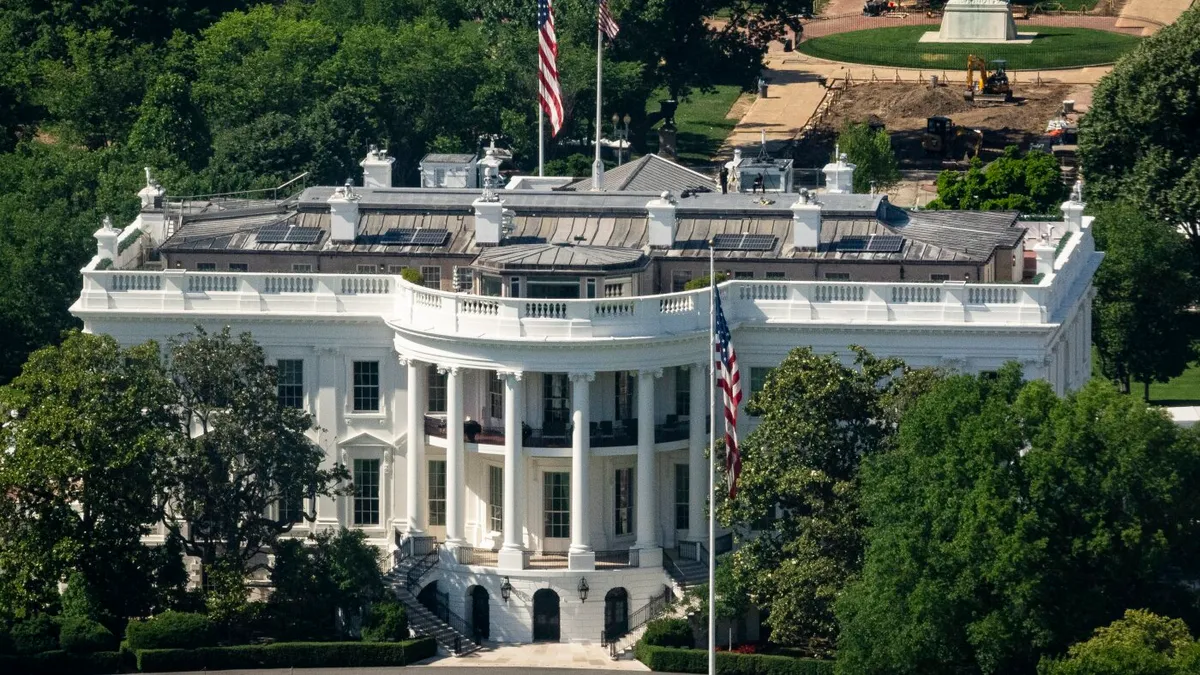
Trump signed an AI executive order on June 2 asking frontier model developers to voluntarily submit systems for government testing 30 days before release.
President Trump signed a long-awaited executive order on June 2, 2026. Titled "Promoting Advanced Artificial Intelligence Innovation and Security," it asks AI companies to voluntarily submit their most powerful models to the federal government for testing up to 30 days before public release. The move marks a notable policy shift for an administration that has spent two years rolling back AI regulation.
The cornerstone of the order is its voluntary nature. The text explicitly states that nothing in the framework should be construed to establish a "mandatory governmental licensing, preclearance, or permitting requirement" for releasing new AI models. It functions as a request for industry cooperation rather than a regulatory gate, and the White House concedes that any binding AI regulation must ultimately come from Congress.
What the Executive Order Requires of Frontier Models

The 30-day review period is triggered by a category designated as a "covered frontier model"—which the order does not yet define. Within 60 days, the National Security Agency (NSA), the Department of the Treasury, and the Department of Homeland Security must develop a classified benchmarking process to assess advanced cyber capabilities and establish the threshold for the designation. The director of the NSA will make the final determination.
Once these benchmarks are established, the voluntary framework will take effect. Developers may consult the government on whether a model under development qualifies as a covered frontier model. They can then grant the government pre-release access under strict confidentiality, insider-risk, and intellectual property protections for up to 30 days. The government and developers will also jointly select the "trusted partners" granted early access, aiming to secure critical infrastructure before a powerful frontier model is widely deployed.
Notably, the order does not mandate any of these steps. Section 3 concludes with an explicit licensing disclaimer, and the full text is available on the White House website. Stripped of its security-focused language, the document reads less like binding AI regulation and more like a standing invitation for industry collaboration.
From 90 Days to 30: A Tug-of-War With Industry

The invitation originally carried much stronger provisions. An earlier draft proposed a 90-day government review period before release, but the White House postponed the signing last month amid concerns that the delay would disadvantage American developers competing with China. The sudden postponement was reported when it occurred. The final version signed by President Trump reduced the review period to 30 days.
The framework relies almost entirely on the cooperation of the prominent AI labs it targets, namely OpenAI, Anthropic, and Google, as there are no penalties for non-participation. Government officials were reportedly swayed by a specific incident in April. Anthropic restricted the release of its 'Mythos Preview' model after discovering it could autonomously identify and exploit software vulnerabilities. That capability alarmed both Silicon Valley and Washington.
That incident reframed the regulatory debate. A White House that had previously focused on minimizing oversight—including a December executive order designed to preempt state-level AI regulation—suddenly had a compelling reason to inspect the capabilities of advanced frontier models before they reach the market.
An AI Cybersecurity Clearinghouse and the Limits of Voluntary Measures
The pre-release review of frontier models represents only one aspect of the directive. The majority of the executive order details an AI cybersecurity agenda with strict deadlines. Within 30 days, the Secretary of the Treasury must establish an "AI cybersecurity clearinghouse"—a voluntary hub where industry and infrastructure operators coordinate vulnerability scanning, validation, and patching. On the same 30-day clock, the Cybersecurity and Infrastructure Security Agency (CISA) must issue binding directives to secure civilian federal systems. The Office of Personnel Management, meanwhile, has 60 days to expand the recruitment of cybersecurity specialists.
The order does contain enforceable provisions in other areas. It instructs the Attorney General to prioritize the prosecution of individuals who weaponize AI to breach computer networks, explicitly citing federal fraud and computer abuse statutes. While defensive AI cybersecurity collaboration remains voluntary, criminal exploitation is not optional.
Ultimately, the directive repeatedly centers on its voluntary nature. Every significant safety provision directed at developers is optional rather than mandatory. While the executive order builds a framework for voluntary cooperation rather than binding AI regulation, whether OpenAI, Anthropic, and Google choose to participate—and whether Congress will codify these measures into law—remains to be seen.
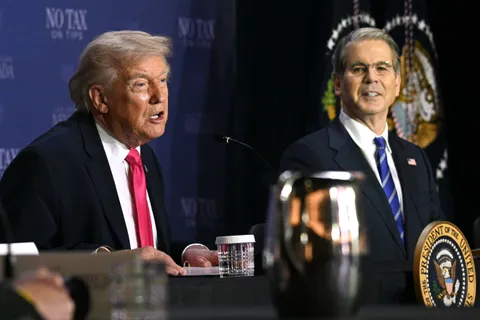



- undefined - Promoting Advanced Artificial Intelligence Innovation and Security
- undefined - Trump signs AI safety order seeking voluntary review of new models
- undefined - Trump Signs Executive Order on Artificial Intelligence
- undefined - Trump Signs AI Executive Order to Increase Government Oversight
- undefined - Trump signs order to promote advanced AI innovation and security