
AI Has Solved Coding and Math Contests
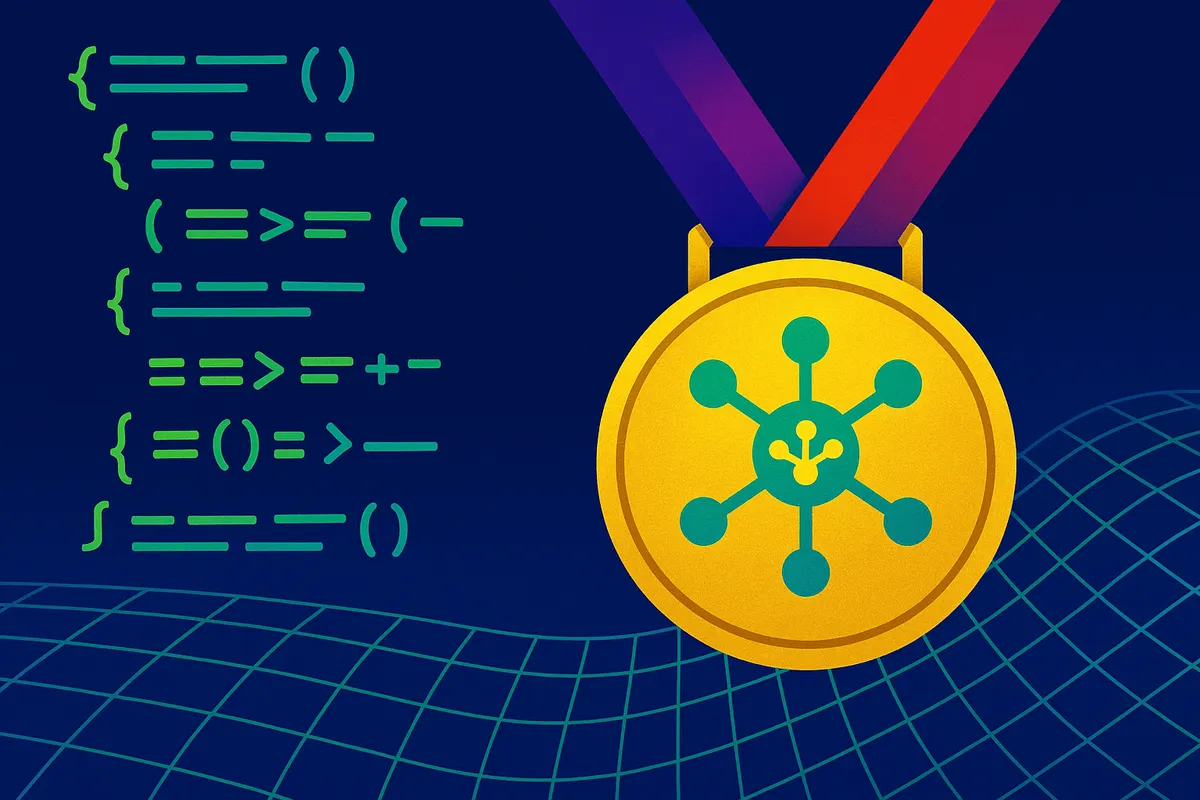
OpenAI's Noam Brown says math and coding contests will soon lose their appeal after AI swept the 2025 IMO, IOI, and ICPC. Next: unsolved problems.
A single remark from OpenAI researcher Noam Brown has stirred the developer and mathematics communities. Brown stated that math and coding competitions will no longer be interesting, either now or in the near future.
The X post by user @haider1 sharing these remarks quickly went viral. Brown's point was not a simple boast, but rather an observation that the contest stage itself loses its purpose once AI matches top-tier human performance.
The evidence supporting this claim accumulated throughout 2025. AI swept major global competitions, including the International Mathematical Olympiad (IMO), the International Olympiad in Informatics (IOI), and the ICPC World Finals—often dubbed the 'coding olympics.' The march of math olympiad AI had become impossible to ignore.
How AI Swept Coding Competitions in 2025
The numbers from these three competitions highlight an unmistakable trend. At the July 2025 IMO, OpenAI's experimental reasoning model solved five out of six problems, scoring 35 out of 42 points to reach a gold-medal standard. Crucially, this was a general-purpose reasoning model, not a math olympiad AI built specifically for the task.
At the IOI in August, the model scored 533.29 points, ranking sixth among approximately 330 human participants. This performance placed it in the top 2%, earning a gold medal and securing first place among all competing AI systems. The model operated under the same constraints as humans, including a five-hour time limit and a 50-submission cap.
The most symbolic milestone occurred at the ICPC World Finals in September. OpenAI's system solved all 12 problems to achieve a perfect score. Since the top human team solved 11 problems, the AI effectively took first place. Google DeepMind's Gemini 2.5 Deep Think also reached gold-medal status by solving 10 problems (OpenAI's announcement).
| Contest | AI result | Significance |
|---|---|---|
| IMO 2025 (math) | 35/42, 5 of 6 solved | Gold-medal level, general model |
| IOI 2025 (informatics) | 533.29 pts, 6th overall | Top 2%, 1st among AI |
| ICPC World Finals (coding) | 12/12 perfect | Best human team 11, effectively 1st |
The New Frontier: Unsolved Problems
These math olympiad AI milestones underpin Noam Brown's thesis. Since AI can now match or exceed top human capabilities in rapidly solving existing, solvable problems, the industry must ask what challenges remain.
Noam Brown argues that the primary challenge is no longer merely solving problems. Instead, the frontier is shifting toward tackling unsolved, novel problems, as well as formulating new challenges. Consequently, contest scores are losing their status as the ultimate benchmark. Reflecting this shift, OpenAI is directing its focus toward coding and the enterprise.
Skeptics point out that while AI adhered to the same time constraints at the ICPC World Finals and IOI, it competed in a separate, dedicated track rather than in direct, head-to-head matchups with humans. Nevertheless, much like the game of Go after AlphaGo, competition culture is expected to adapt, with human participants leveraging AI tools to elevate their performance.

- OpenAI - OpenAI at the 2025 ICPC World Finals
- ICPC - ICPC World Finals 2025 — OpenAI
- The Decoder - OpenAI's AI system wins a gold-medal-level score at the IOI 2025
- VentureBeat - Google and OpenAI's coding wins at university competition show enterprise AI
- Noam Brown (X) - Noam Brown on the future of math and coding competitions