
‘Chat Is Dead’: AI Labs Pivot to Agents
OpenAI is rebuilding ChatGPT into an autonomous agent super app, and rivals Google, Anthropic, and Microsoft are shifting from chatbots to agents too.
A senior OpenAI executive recently summarized the industry's direction in three words: “Chat is dead.” On June 7, the Financial Times reported that OpenAI is preparing its most significant redesign since the debut of ChatGPT, moving away from the traditional prompt-and-response format in favor of a task-executing “super app” powered by autonomous agents.
This shift is not unique to OpenAI. Tech giants like Google, Anthropic, and Microsoft are moving in the same direction almost in lockstep. The defining narrative of the AI sector in 2026 has shifted from which company can build the most articulate chatbot to which can field the most capable agent.
OpenAI Leads the Shift to an Agent-Based Super App
The upcoming ChatGPT super app overhaul centers on a seamless, single-interface experience. Currently, integrating third-party applications requires users to manually search for and install external tools. Under the new system, a single natural-language command will suffice; ChatGPT will interpret the user's intent, activate partner applications like Canva or Booking.com, and complete the requested task.
This sudden urgency is driven by financial pressure. As OpenAI prepares for a potential initial public offering, it must address the reality that approximately 95% of its estimated one billion monthly active users remain on its free tier, limiting revenue growth. In contrast, its developer-focused coding agent, Codex, has surpassed five million weekly active users, the vast majority of whom are paying subscribers — proof that a coding agent earns money where a free chatbot cannot.
Consequently, OpenAI has reportedly scaled back lower-margin services, including its video generator Sora, to concentrate resources on Codex and agentic AI. The declaration that ChatGPT's “chat is dead” is less a marketing slogan than a reflection of a cold commercial reality: the old chatbot model, built only for text query-and-response, can no longer sustain rising operational costs.
Competitors Align Under the Agent Model

OpenAI is not alone in calculating these margins. During its I/O conference in May, Google unveiled Gemini Spark, a personal agent designed to run continuously in the background. The system operates across Gmail, Google Drive, and Google Workspace to automate routine workflows based on user instructions.
Anthropic has similarly repositioned its assistant, Claude, as an agent capable of direct computer interaction. Through a feature called Computer Use, the AI can read screen contents and directly control the mouse and keyboard. This capability is paired with task-specific tools through Agent Skills and broader workflow automation via Cowork.
Microsoft has taken the most direct approach. At its Build 2026 conference, the company redefined Copilot from a supportive assistant into an autonomous executing agent. Microsoft reported that the deployment of agents across its Microsoft 365 ecosystem grew fifteenfold over the past year, describing the technology as the next operating layer for workplace productivity.
The Paradigm Shift to Intent-Based Computing
This description is not mere marketing hype. The industry-wide pivot reflects a fundamental shift in the paradigm of computing: transitioning from imperative computing, which requires users to detail every step of a process, to intent-based computing, where users specify a desired outcome and the system autonomously determines the path to achieve it.
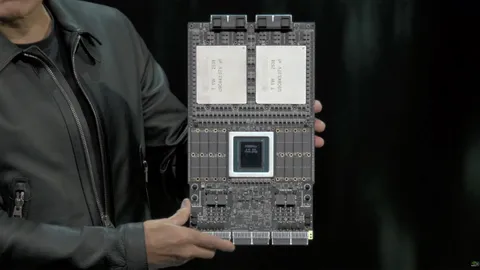
The technological infrastructure required to support this shift has also matured. The convergence of advanced reasoning models, standardized tool-calling protocols, and specialized hardware like Nvidia's Vera Rubin chips has made agentic AI viable at scale. Gartner projects that 40% of enterprise applications will feature task-specific AI agents by the end of 2026, a significant increase from less than 5% in 2025.
Ultimately, the traditional chatbot interface is not disappearing, but rather evolving into the user-facing portal for these AI agents. The familiar chatbot gives way to a ChatGPT agent, and nearly every major lab now ships an OpenAI-style agent that acts on its own. While users will still interact with a familiar chat interface, the underlying engine will transition from generating text to executing tasks. The declaration that “chat is dead” is not just the marketing slogan of a single developer; it is the blueprint for the next phase of the entire AI industry.

- Financial Times - OpenAI plans biggest ChatGPT overhaul into an agent-focused super app
- The Decoder - OpenAI says chat is dead and plans to rebuild ChatGPT as a full-blown agent app
- TechCrunch - Google introduces Gemini Spark, a 24/7 agentic assistant with Gmail integration
- Anthropic - Equipping agents for the real world with Agent Skills
- Microsoft - Work Trend Index: Agents, human agency, and the opportunity for every organization