June 2026 Coding Agents: Opus 4.8 vs GPT-5.5

Claude Opus 4.8 leads June 2026's coding agents, with GPT-5.5 closing the gap on backend. Composer 2.5 and Gemini 3.5 Flash follow on value and frontend.
By June 2026, the coding agent market has evolved beyond a single dominant leader. With capabilities increasingly specialized, developers are shifting their focus from finding a single best model to selecting the right tool for specific tasks.
Anthropic's Claude Opus 4.8 maintains its lead in overall evaluations. However, OpenAI's GPT-5.5 has closed the gap in backend and complex engineering tasks, establishing a clear dual-power structure. Meanwhile, Composer 2.5 and Gemini 3.5 Flash follow closely, carving out niches in value and frontend development. Rather than relying solely on benchmark scores, these rankings weigh harness maturity and how coding agents perform in real-world use.
Claude Opus 4.8 Leads Overall as OpenAI's GPT-5.5 Closes In
At the forefront is Claude Opus 4.8, released on May 28. In addition to its balanced performance across frontend and backend environments, the model's primary differentiator is Claude Code, an exceptionally polished developer harness. On SWE-Bench Pro, the most demanding coding benchmark, Opus 4.8 scored 69.2%, outperforming GPT-5.5 (58.6%) and Gemini 3.1 Pro (54.2%) by over ten percentage points.
GPT-5.5 follows closely, demonstrating particular strength in complex backend tasks where terminal operations and multi-step engineering intersect. On Terminal-Bench 2.1, using its proprietary Codex CLI harness, GPT-5.5 scored 83.4%, surpassing Opus 4.8's 74.6%. However, reviewers note that GPT-5.5 remains relatively weak in frontend applications.
The performance gap has narrowed to the point where rankings can shift based entirely on the choice of harness. On the public Terminus-2 harness, Opus 4.8 performs nearly on par with GPT-5.5, whereas GPT-5.5 leads when utilizing Codex CLI. Consequently, developers running coding agents are adopting a pragmatic rule of thumb: Opus for general development, and GPT-5.5 for complex backend challenges, as the launch coverage noted. For a detailed analysis, Vellum's benchmark breakdown offers valuable insights.
Composer 2.5's Cost Efficiency vs Gemini's Frontend Edge

Positioned just below the top two is Composer 2.5, which has gained traction primarily through aggressive pricing. Released on May 18, this coding-specific model from Cursor was distilled and reinforced through reinforcement learning (RL) from the open-source Kimi K2.5 checkpoint. While scoring 79.8% on SWE-Bench Multilingual—approaching frontier-class performance—it costs just $0.50 per million input tokens and $2.50 per million output tokens, roughly one-tenth the rate of its competitors. The model is integrated directly into Cursor and Grok Build.
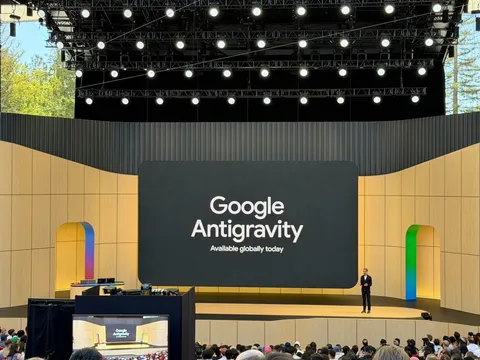
Ranked fourth, Gemini 3.5 Flash excels in frontend development. Operating on Google's Antigravity platform, it rapidly generates responsive user interfaces within minutes. However, the model struggles with context retention during extended tasks, underperforms on the backend, and is held back by the limitations of the Antigravity harness itself. Despite these drawbacks, the lightweight model demonstrated specialized capability by scoring 57.9% on the Finance Agent v2 benchmark, surpassing even Opus 4.8 (53.9%).
No Single Model Dominates the Entire Workflow
Other models also punch above their weight in specialized areas, most notably Chinese offerings such as Kimi 2.6, DeepSeek 4 Pro, and Qwen 3.7 Max. Their cost-efficiency relative to established global models makes them fast-rising dark horses among coding agents on both performance and value. Furthermore, the momentum of the open-weight ecosystem is growing, as demonstrated by Composer 2.5's reliance on the Kimi K2.5 checkpoint.
Ultimately, the coding agent landscape in June has organized into four distinct quadrants: Opus as the versatile generalist, GPT-5.5 as the specialist for complex backend tasks, Composer 2.5 as the cost-effective alternative, and Gemini 3.5 Flash as the frontend specialist. The era of a single model dominating the entire development pipeline has ended. For engineering teams deploying coding agents, a multi-agent strategy—matching the specific task to the optimal model—has emerged as the most practical path forward.