
Meta Severs Manus Ties After China Unwind Order
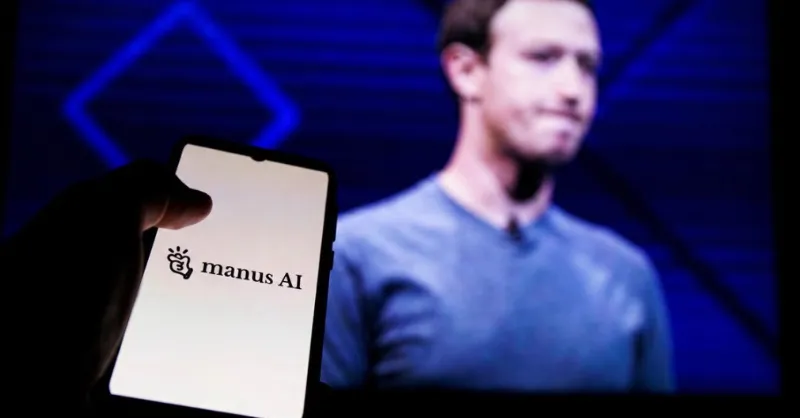
Meta cut off data sharing with Manus, completing an operational split after China ordered the $2B deal unwound. Founders seek $1B to buy the company back.
Meta has severed its operational ties with agentic AI startup Manus. Bloomberg reported on June 11 that the social media giant halted all data sharing with the company, completing their separation roughly six weeks after Beijing ordered the $2 billion acquisition unwound.
The acquisition, which closed in December 2025, is now being dismantled less than six months later. China's National Development and Reform Commission (NDRC) ordered the transaction reversed in late April under the country's AI regulation framework, making the firewall implemented this month the most concrete step toward unwinding the deal to date.
Inside the Firewall: Restricting Data, Tools, and Access
The initial phase of the separation focuses on access control. According to Bloomberg, Manus employees have been locked out of Meta's internal networks since early June. Meta personnel have similarly been restricted from using Manus tools, and engineering teams have been instructed to migrate ongoing projects to alternative platforms.
All planned integrations have been frozen. A more formidable challenge lies in the fact that much of Manus's agentic AI technology has already been integrated into Meta's core systems, making the process of disentangling the software both technically complex and costly.
The $2 Billion AI Acquisition Reversed by Beijing

The separation has proven highly complex because regulators stepped in after the deal had already closed. Meta acquired Manus in December 2025 for a valuation exceeding $2 billion. The startup, which develops agentic AI systems capable of autonomously executing multi-step workflows like market research and software development, surpassed a $100 million annualized revenue run rate within eight months of its launch. This rapid growth positioned Manus at the forefront of the industry-wide transition from conversational chatbots to autonomous software.
Corporate integration had progressed rapidly prior to the intervention. TechCrunch reported that approximately 100 Manus employees had relocated to Meta's Singapore offices by March, and Manus Chief Executive Xiao Hong began reporting directly to Meta Chief Operating Officer Javier Olivan.
However, on April 27, the NDRC issued a single-sentence statement prohibiting the foreign investment and ordering the parties to withdraw from the deal without providing a detailed explanation — a stark display of how far China's AI regulation now reaches. During the regulatory review process, Xiao and Chief Scientist Ji Yichao were reportedly barred from leaving mainland China.
A $1 Billion Buyback and Potential Hong Kong Listing
Having weathered exit bans, the startup's founders are now pursuing a buyback. Xiao Hong, Ji Yichao, and Zhang Tao are exploring a funding round of up to $1 billion to regain control of the company, with the repurchase expected to value Manus at least at the price Meta paid in the original deal.
If the transaction is finalized, Manus is expected to restructure as an independent agentic AI company under a Chinese joint venture, targeting an initial public offering in Hong Kong rather than the United States. The company is projected to generate approximately $1 billion in revenue in 2026.
This case represents the most definitive instance to date of Chinese AI regulation preventing a technology transfer to a United States buyer. Because regulators demonstrated their willingness to undo a completed transaction, the strategy for future startups seeking to relocate from China to Singapore to attract Western capital—and for the venture capitalists backing them—has been fundamentally altered.

- Bloomberg - Meta Severs Manus Data Access After China Orders Buyout Unwound
- TechCrunch - China blocks Meta's $2B Manus deal after months-long probe
- CNBC - Meta acquires intelligent agent firm Manus, capping year of aggressive AI moves
- NPR - China blocks Meta from acquiring AI startup Manus
- Tech Funding News - China said no to Meta's $2B deal, now Manus AI needs $1B to reclaim what it built